
You have a lease, a contractor and an opening date. The dining chairs are still on a screen. A supplier says the furniture will be ready on time, and a freight quote gives you an estimated arrival date. It is tempting to put a tick beside furniture and move on.
But ready at the factory, arriving at the port and ready for your first guests are three different milestones. Confusing them can leave a finished dining room without usable seating.
When ordering restaurant furniture from China, plan backwards from the day the room must be fully furnished, checked and ready to use. Then connect every approval, production and delivery milestone to that date. There is no single lead time that fits every custom order or shipping route.
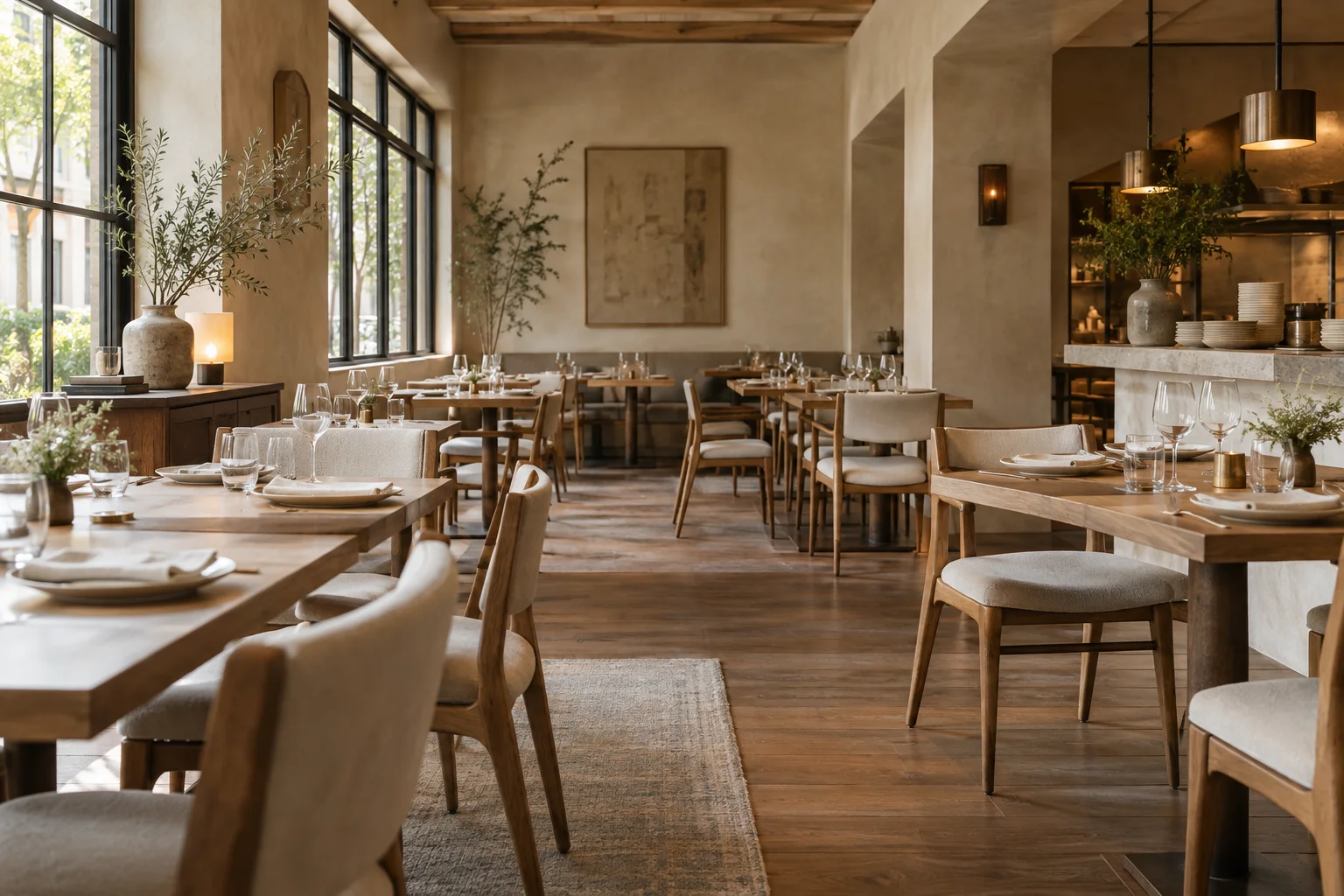
1. Set a ready-to-seat date, not just an opening date
Your opening day should not also be your furniture delivery day. Before guests arrive, someone needs to unpack the order, assemble any separate components, position tables, check stability and clear the packaging. You also need room to deal with a missing fitting or a damaged item.
Agree a furniture-ready deadline with the contractor and whoever will receive the shipment. Work backwards through these milestones:
- Ready to use: furniture assembled, checked and positioned.
- On site: delivery received with access and unloading arranged.
- Released for delivery: destination formalities and cargo release completed.
- Shipped: goods actually departed, not simply booked.
- Ready to ship: production, agreed inspection and packing completed.
- Approved for production: drawings, materials and order details signed off.
Ask the supplier and forwarder to fill in their parts of this schedule. Mark estimates as estimates, and agree a project-specific contingency allowance. A deadline based on every step going perfectly is not a dependable opening plan.
2. Close the decisions that keep production waiting
A deposit does not resolve an unfinished specification. If the upholstery, dimensions or drawing approval is still open, ask exactly what must happen before the production lead time begins.
For restaurant seating, settle the model, quantity, finish, upholstery reference and relevant dimensions. Check the chair against the actual table specification, including whether arms fit beneath the tabletop. For restaurant tables, confirm the top size, finished height, base and assembly arrangement. Custom booths need approved dimensions coordinated with the site.
Keep one final specification record with a revision date. If the designer changes a fabric or the operator adds seats, request the effect on production and dispatch before accepting the change. A small visual adjustment can still affect materials already ordered or work already scheduled.
Use samples to settle decisions, rather than treating sample approval as a formality. Where a physical sample is needed, include its preparation, delivery, review and possible revision in the plan.
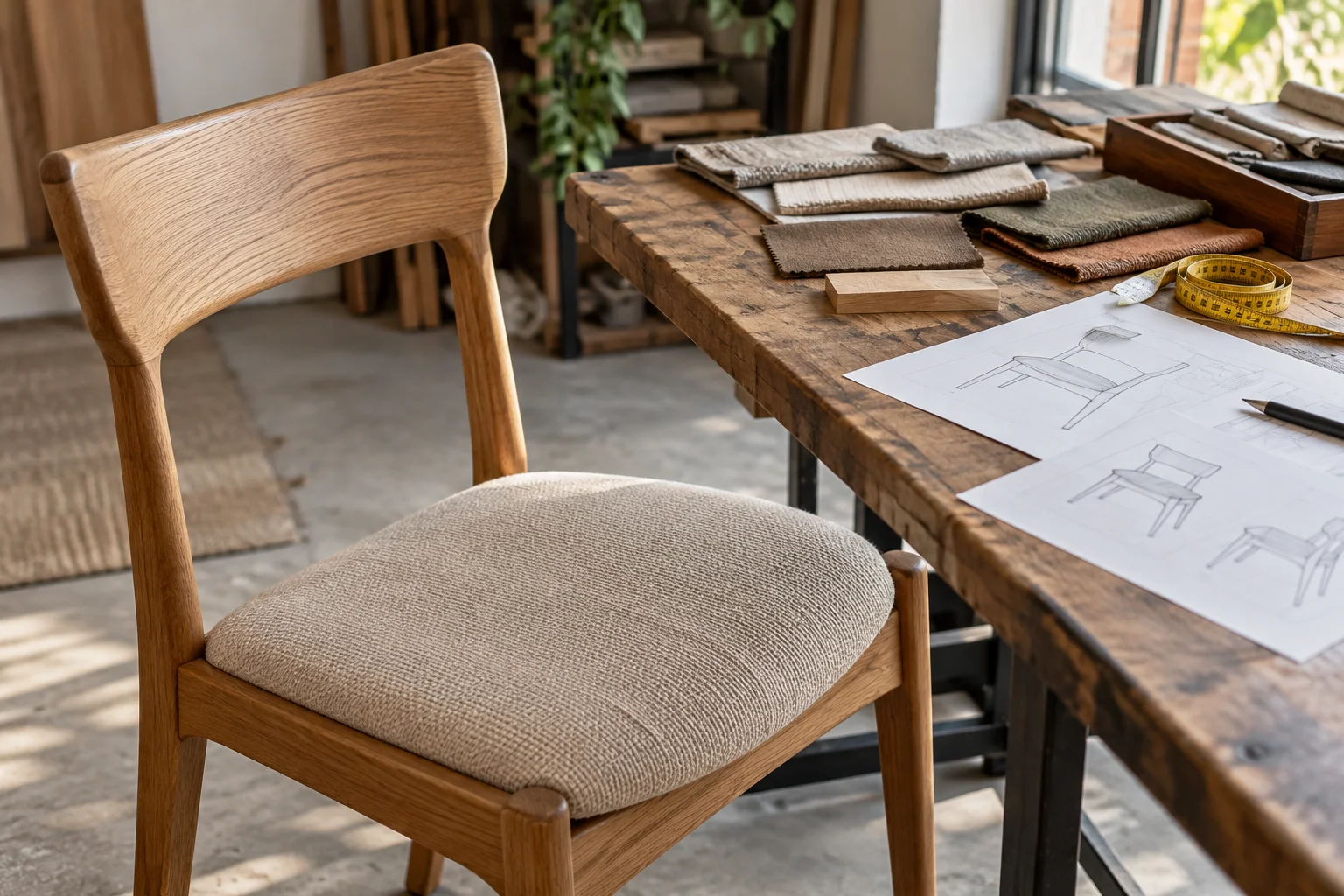
3. Ask what the shipping date actually means
When someone says “arrival,” ask where. Is that the destination port, a warehouse or your restaurant? When someone says “delivery,” ask what is included after the truck arrives.
A vessel's estimated arrival does not tell you when the furniture can be installed. Your forwarder needs to account for the applicable release process, onward transport and a delivery appointment. If the cargo moves through an intermediate hub, ask how that affects the plan and what happens if a connection changes.
Record the agreed Incoterms rule, its version and named place, but do not treat those few letters as a complete installation agreement. The International Trade Administration's Incoterms guidance explains how the rules allocate logistics responsibilities and also notes that they do not resolve liability for delayed delivery.
Separately confirm who handles unloading, moving items inside, assembly and packaging removal. A quote described as door-to-door should still spell out those services. Get the delivery contact and escalation route before the shipment leaves, rather than finding the right person when the truck is outside.
4. Prepare the paperwork before the furniture sails
Documentation is easier to correct while the shipment is being prepared than while everyone is waiting for its release.
Maersk's customs documentation guidance identifies the commercial invoice, packing list and bill of lading or cargo receipt among the documents required, with additional requirements depending on the goods. Have your destination broker confirm the exact requirements for your shipment rather than relying on a generic checklist.
Ask the supplier, forwarder and broker to agree who prepares each document and who checks it. Make sure product descriptions, quantities and consignee details are consistent. Flag the actual materials and any special product features early so the broker can assess what information is needed.
This is also the time to identify any destination-specific product documentation your project requires. Do not wait until dispatch to discover that a document requested by your broker, landlord or project consultant has never been discussed.
5. Plan the last few metres into the restaurant
A shipment can reach the correct address and still be difficult to receive. A large table top may not fit through the entrance. A delivery truck may need a booked loading slot. Furniture may arrive before the floor is ready.
Check access using the packed dimensions, not only the assembled product dimensions. Tell the delivery provider about stairs, lifts, narrow doors, vehicle restrictions and the distance from the unloading point to the dining room. Agree who supplies the people or equipment needed to move the goods safely.
If the site may not be ready, discuss an alternative receiving or storage arrangement in advance, including its cost. Neither the roadside nor an active construction area is a good place to improvise storage for upholstered furniture.
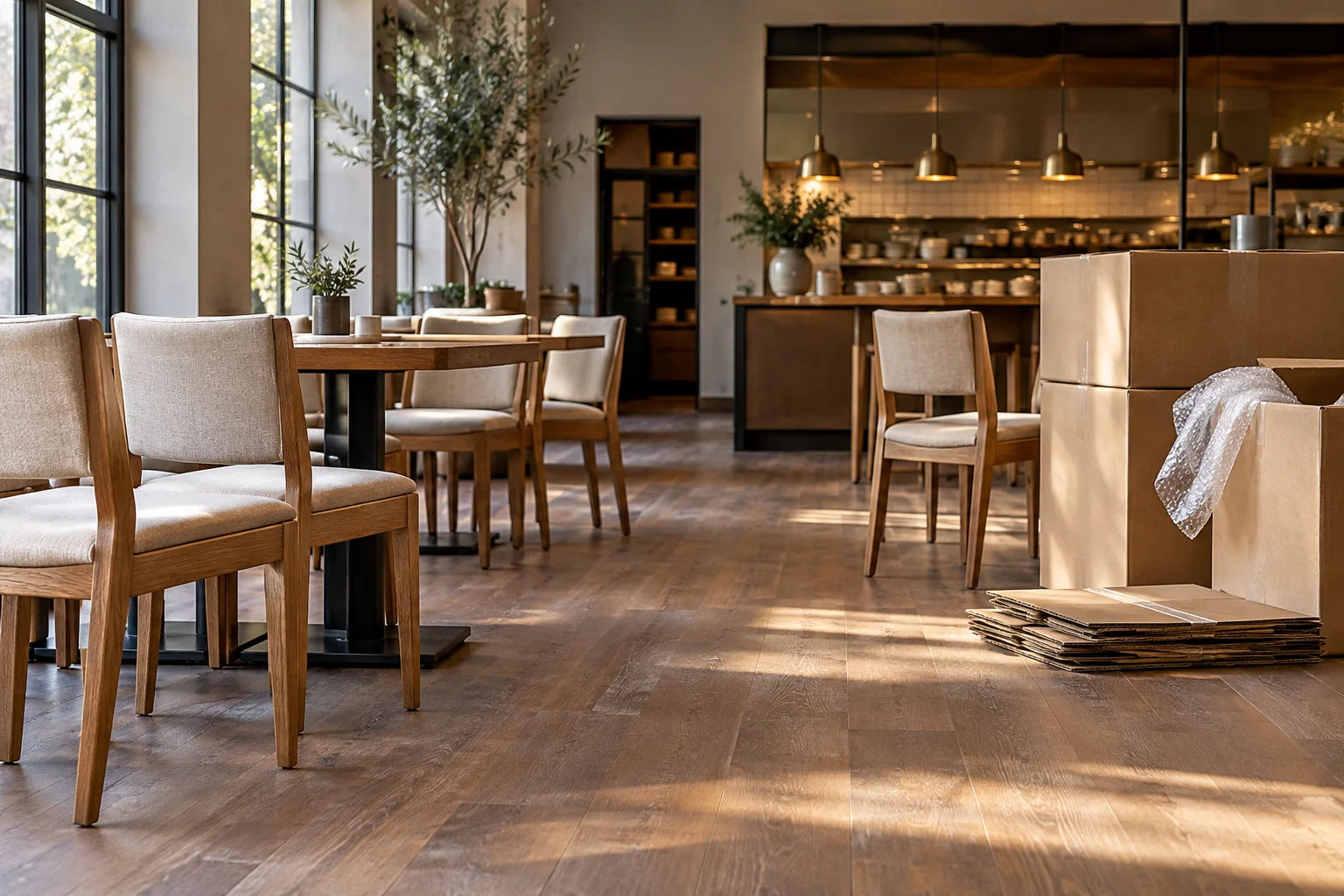
6. Decide your fallback before a milestone slips
A useful update says which milestone is complete, what is still outstanding and whether the next date has changed. “Everything is progressing” does not help you decide whether to book installers or adjust the opening plan.
Before committing to the order, run through this final check:
- Is the production start condition clear, with all approvals assigned?
- Does the schedule reach the restaurant, not stop at the port?
- Are documents, release arrangements and delivery contacts assigned?
- Are unloading, access, assembly and site readiness covered?
- Is there time to inspect the furniture and address problems?
- Who decides on a fallback if a critical date moves?
Depending on the project, a fallback might mean locally sourced temporary seating, a separately quoted partial shipment or a revised opening plan. Compare the practicality and total cost before choosing one. Do not assume that a faster freight option can solve unfinished production.
If you are planning a restaurant opening, send LONGG your furniture list, destination and required on-site date. Include your floor plan and which specifications are already approved. That gives the timing discussion a concrete starting point, before you commit your opening plans to an estimated arrival.