
You find a restaurant chair from a supplier in China for less than the price quoted locally. Multiply the difference by a dining room full of chairs, and the saving looks worth pursuing.
Then the questions start. Does the shipping price include the charges at your end? Who gets the furniture off the truck? Will the chairs arrive assembled? And are you comparing the same construction, or just a similar photograph?
Buying from China can make sense, but the unit price cannot settle that decision. Before paying a deposit, compare what each option will cost to get the furniture into your restaurant and ready to use.
Work out how much saving you actually have
Start with the difference between the two furniture quotations, using the same quantity and currency. That gives you the amount available to cover any extra costs of importing.
Suppose you need 60 chairs and the overseas quote is $7 less per chair. The difference is $420. If the overseas option adds more than $420 in costs that the local option already covers, the lower chair price has not produced a lower project cost. These figures are simply an illustration, not furniture or freight rates.
This calculation is worth doing early. It tells you whether to spend more time investigating the quote or whether a small change in freight could remove the saving.
Keep any benefit from customization separate. A chair made to your chosen dimensions or upholstery may be worth paying more for. You can make that decision honestly without calling it a cost saving.
Find out where the quoted price stops
Ask each supplier to identify the delivery point and what the price includes. A quotation ending at a port is not directly comparable with one covering delivery to your restaurant.
Build the comparison around these costs:
- Furniture and preparation: The agreed products, samples, custom work and packing, where charged separately.
- Transport: Collection, international freight and the remaining journey to the agreed destination.
- Import charges: Applicable duties, taxes, clearance and handling charges, with responsibility confirmed.
- Getting it into service: Unloading, moving the furniture inside and assembly, if these are not included.
Add insurance and payment or currency-conversion charges where they apply. Some costs may already be bundled into the supplier’s price. Do not add them twice, but do not treat an unanswered line as zero either.
For the import-related part of the comparison, this is the idea behind landed cost. For a restaurant opening, you also need to budget for the work between delivery and the first guest sitting down.
Have the applicable import charges checked for your destination and the actual goods. A tax estimate from someone else’s furniture order may not apply to yours.
Ask what happens when the truck arrives
“Door-to-door” sounds reassuring, but it still needs a practical conversation.
Will the truck stop outside the building? Is unloading included? Can the crew take the furniture upstairs? If the delivery arrives before the site is ready, who arranges storage and pays for another delivery?
Even a formal DDP quotation does not automatically include unloading. Under Incoterms® 2020, DDP delivery is generally made at the named destination with the goods ready to unload; inside placement and assembly need to be agreed separately. The ICC’s explanation of DAP and DDP sets out this distinction.
Describe the real site when asking for a price. An upstairs dining room with restricted access is a different delivery job from a ground-floor restaurant with a suitable unloading area. Let the supplier or delivery provider price the job you actually need.
Check the packed order before trusting the freight estimate
A picture of a chair gives a freight provider very little to work with. Ask for the proposed packing method, carton count, package dimensions and gross weight for your quantity.
If a supplier offers a knock-down version to change the shipping arrangement, price the assembly work as well. Find out what arrives in each carton, who will put it together and whether the necessary instructions and hardware are included. A change that reduces the transport quote may move work onto your site team.
Do the same for restaurant tables. Confirm whether tops and bases travel separately and what needs to happen after unpacking. Keep the packing information attached to the quotation so a later product or quantity change triggers a fresh freight check.
Ask when the transport quote expires and which parts are still estimates. A rate obtained while you are choosing finishes should not quietly become the assumed shipping budget months later.
Make sure the cheaper quote is for the same chair
Once the delivery costs are clear, go back to the product. Two similar images do not establish matching materials, dimensions or construction.
For restaurant seating, compare the exact model, frame specification, upholstery and finish. Include assembly condition and any performance requirements in the written brief. If one quote is incomplete, ask for clarification before deciding that it represents better value.
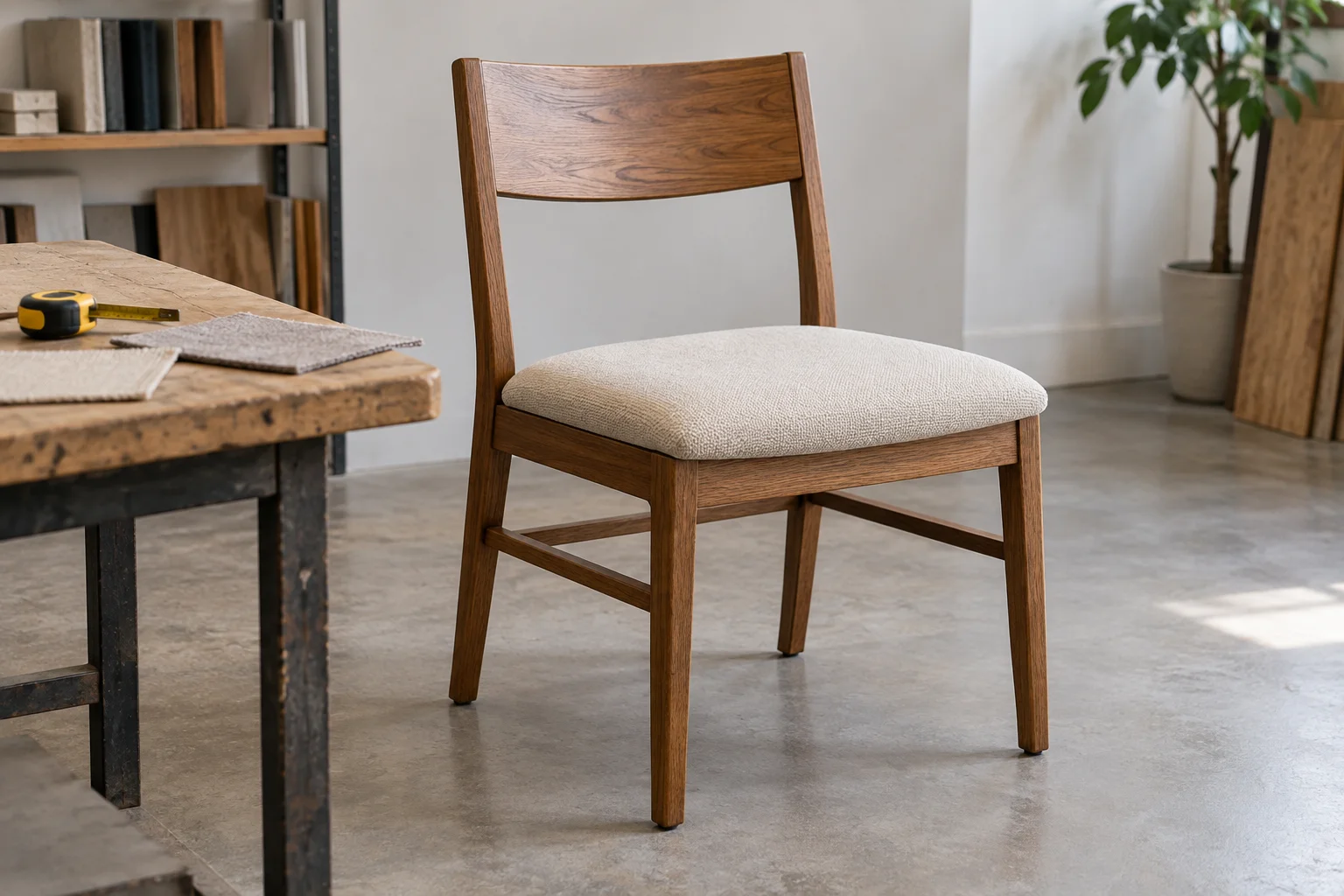
AI-generated concept illustration, not an actual LONGG product photograph.
A sample can help resolve a specific uncertainty, such as comfort or finish. Ask what the sample and its shipping will cost before arranging it, and whether any credit against the order is offered. Treat that credit as part of the quotation only when it is confirmed.
Keep the after-sales comparison practical too. If a seat pad or glide needs replacing, what can be supplied, from where, and who pays the freight? You do not need to predict every repair, but a low purchase price is less useful if routine replacement arrangements remain unclear.
Decide on the complete offer
Put the two offers side by side only when the product, quantity and delivery scope are comparable. Separate confirmed prices from estimates and unresolved charges. You should be able to explain the remaining saving without relying on an optimistic assumption.
The import option may still be the better choice. It may offer the combination of price, customization and coordinated furniture you need. A local option may make more sense for a small urgent replacement order. Let the requirements of the project decide rather than assuming either route is always cheaper.
To discuss an order with LONGG, send your furniture list, quantities and delivery location. Include your required installation date and any site-access constraints. Ask for the product specification, packing information and delivery scope together, so you can assess the quotation as a complete offer.