
A dining room rarely needs just one kind of furniture. It needs commercial restaurant seating that works with the tables, booths that fit the layout, bar stools in the right finish, and enough consistency to make the whole space feel intentional.
For a U.S. restaurant owner, buying those pieces separately can become a project of its own. One supplier has the right chair but not the upholstery. Another has the table finish, but only in a standard size. Delivery dates do not line up, and every change creates another conversation.
Buying directly from a furniture manufacturer in China offers a different approach: develop the furniture package around the restaurant, coordinate production through one supplier, and arrange delivery as part of the same project.
As a factory-direct restaurant furniture supplier in China, LONGG provides commercial restaurant furniture and a door-to-door, one-stop service for U.S. restaurant projects. The opportunity goes beyond a lower factory quotation. It is the ability to bring design choices, manufacturing, packaging, and delivery coordination into one purchasing process.
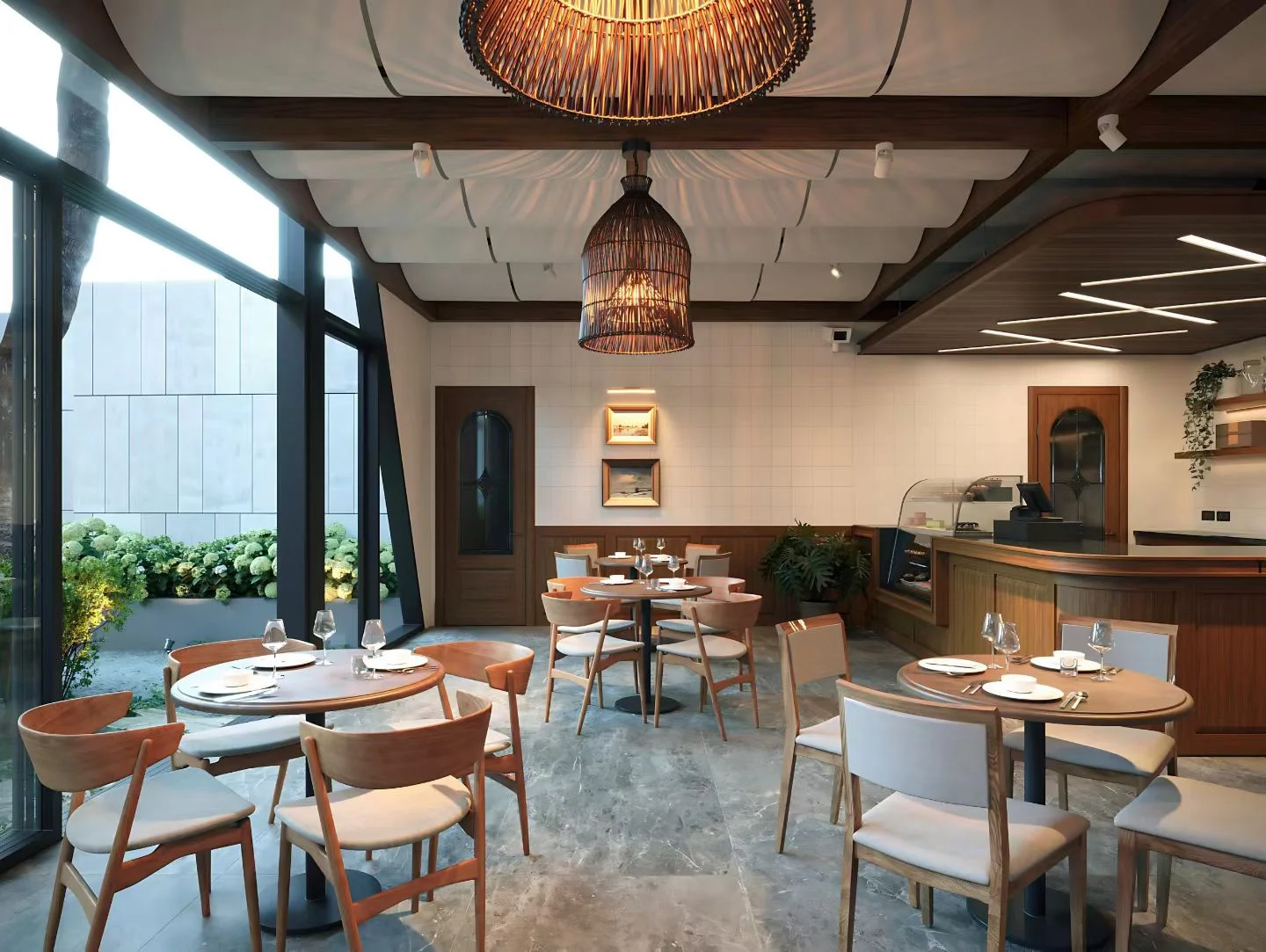
LONGG customer project featuring coordinated wooden tables and upholstered dining chairs.
A complete furniture package without piecing together several catalogs
A restaurant with booths, loose seating, and a bar needs variety without looking like three unrelated projects. The wood tones should work together. Upholstery needs a clear specification. Restaurant table sizes must suit the seating plan, rather than force last-minute changes to it.
Factory-direct sourcing gives buyers an opportunity to settle those details before production. Instead of accepting the closest available catalog combination, you can discuss dimensions, materials, finishes, and upholstery as a coordinated package.
LONGG works with restaurant owners, designers, and hospitality project buyers on custom restaurant furniture. A useful starting point is a floor plan and a short furniture schedule: item, quantity, dimensions, preferred material, and reference image. If a detail is undecided, mark it clearly rather than leaving the factory to interpret it.
This is especially valuable when the design includes a distinctive restaurant booth seating layout or a finish that needs to carry across several seating types. Agreeing on one specification is easier than correcting mismatched purchases after they reach the restaurant.
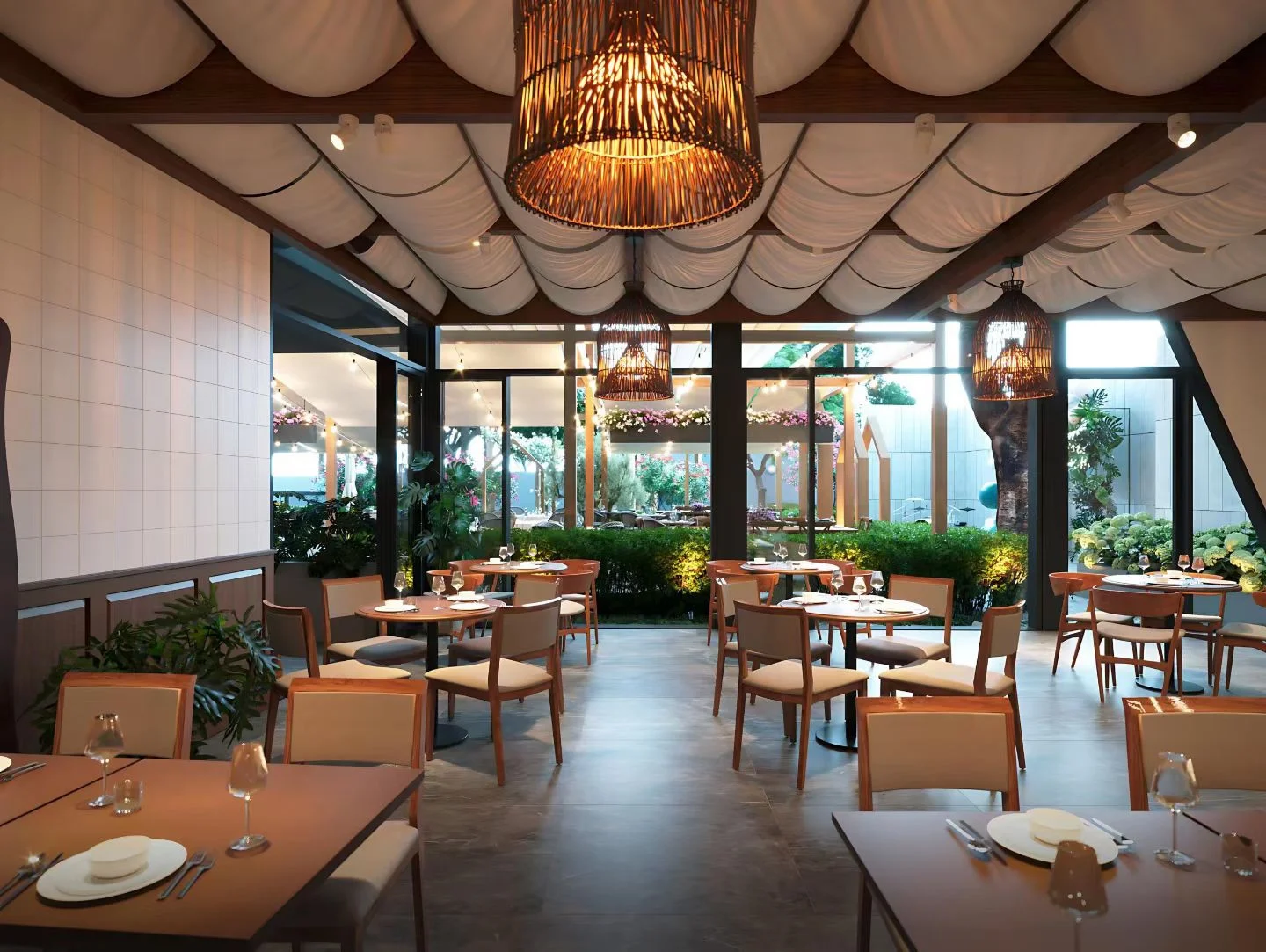
Another view of the customer dining room, with consistent furniture finishes across the space.
Match restaurant tables and chairs to each area
Build the furniture schedule by how each area will be used. Commercial restaurant chairs should suit the expected daily use, cleaning routine, and table height. Compare wood restaurant chairs and upholstered restaurant chairs by the specified frame, finish, upholstery, and comfort requirements, not appearance alone. For commercial restaurant tables, confirm the tabletop dimensions, base position, seating capacity, and aisle clearance together.
Custom restaurant booths need an approved layout and dimensions before production. At the bar, choose restaurant bar stools with a seat height that matches the finished counter; commercial bar stools should also provide suitable foot support and clearance. Keep outdoor restaurant furniture as a separate part of the quotation, with materials and finishes confirmed for the actual exposure conditions.
Use LONGG restaurant furniture projects as visual references, then specify the restaurant chairs, tables, booths, and stools your own floor plan needs. This gives a custom restaurant furniture order a practical starting point rather than a list of loosely matched products.
Factory-direct purchasing gives you more control over the budget
When you discuss the design with the manufacturer, you can also discuss what is driving its cost.
A different table size, upholstery choice, construction detail, or packaging arrangement may change the quotation. That creates room to adjust the specification before committing to the order, while protecting the features customers actually notice and the staff rely on.
Ask for a breakdown by furniture type. Keep the design consistent enough that you can compare revisions properly. If a revised quote is lower, you should be able to see whether the difference came from material, quantity, dimensions, or a change in delivery scope.
The strongest case for buying from China is often a planned package with repeat quantities and meaningful customization. A few urgent replacement chairs are a different purchase. Nearby stock may be the practical choice for those, even when a factory-direct order makes sense for a full opening or renovation.
There is no useful universal savings percentage. The relevant number is what your particular furniture package will cost when it reaches your restaurant in usable condition.
Compare the total delivered cost, not the chair price alone
A local delivered quotation and an overseas factory quotation may cover different work. Put both on the same basis before deciding which offers better value.
Your comparison should account for:
- The approved furniture specification and quantities.
- Samples, inspection, and protective packaging where applicable.
- International transport, insurance, and destination handling.
- Customs clearance, applicable duties, and other import charges.
- Delivery to the restaurant, including any special access requirements.
- Unloading, assembly, installation, and packaging disposal if needed.
Do not add these costs twice when they are already included in a service package. Instead, ask the supplier to label what is included, excluded, or subject to confirmation.
For U.S. imports, the applicable tariff treatment depends on the actual goods and the current rules. A supplier’s export code is not necessarily the correct U.S. classification, and additional duties may need separate consideration. The U.S. International Trade Commission’s classification guidance explains these distinctions. Have the applicable classification, duties, and importer responsibilities confirmed for your order before paying a deposit.
That gives you a defensible purchasing decision, rather than a comparison built around the lowest number on the first page.
Door-to-door service reduces the coordination burden
Buying overseas can feel complicated when the buyer is expected to connect the factory, freight provider, customs process, and final delivery independently.
LONGG’s door-to-door furniture delivery service is intended to make sourcing restaurant furniture from China easier for U.S. buyers to manage. You can discuss the furniture order and delivery requirements together, rather than treating shipping as a problem to solve after production finishes.
Start with the actual delivery address and ZIP code, not just the nearest port. Tell the team whether the property has a loading dock, whether a truck can stop nearby, and whether deliveries require an appointment. A restaurant in a busy downtown building has different receiving conditions from a freestanding location with a large parking area.
Ask for the agreed service scope in writing. Door-to-door describes the delivery arrangement; the quotation should still make clear who handles clearance, which taxes and charges are included, and whether unloading or installation is part of the service.
The benefit is a clearer plan and a more coordinated handover. You know what LONGG will arrange and what your local team needs to prepare before the furniture arrives.
Approve the details before they become a shipment
Customization is valuable only when the finished furniture matches the approved design.
Before bulk production, resolve the details that are difficult to judge from a lifestyle photograph: seat height, arm clearance under the table, upholstery texture, tabletop edge, finish color, and how the base affects legroom. Use drawings, material samples, or a furniture sample as appropriate to the order.
Keep a written approval record. Photographs taken under different lighting are useful references, but they should not be the only basis for a critical color match.
Plan backward from the date the restaurant needs the furniture ready for use. Allow for specification approval, production, inspection, transport, clearance, and final delivery. A factory completion date should not be treated as the date your team can start seating guests.
For a second or third location, retain the approved specifications and ask about repeat-order availability. That makes future purchasing more consistent without assuming that every fabric or finish will remain available indefinitely.
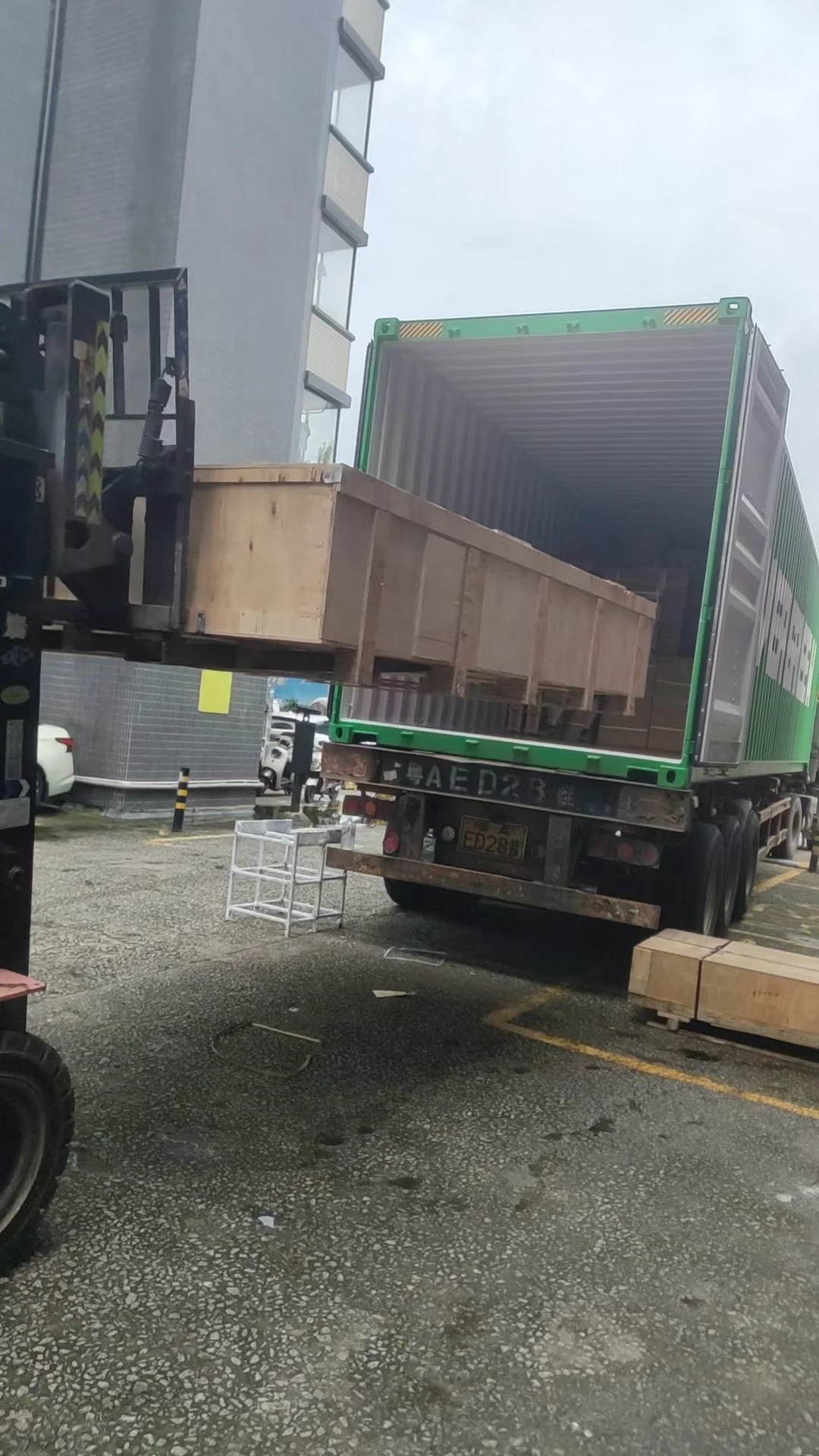
LONGG loading photo showing a crated shipment being moved into a container.
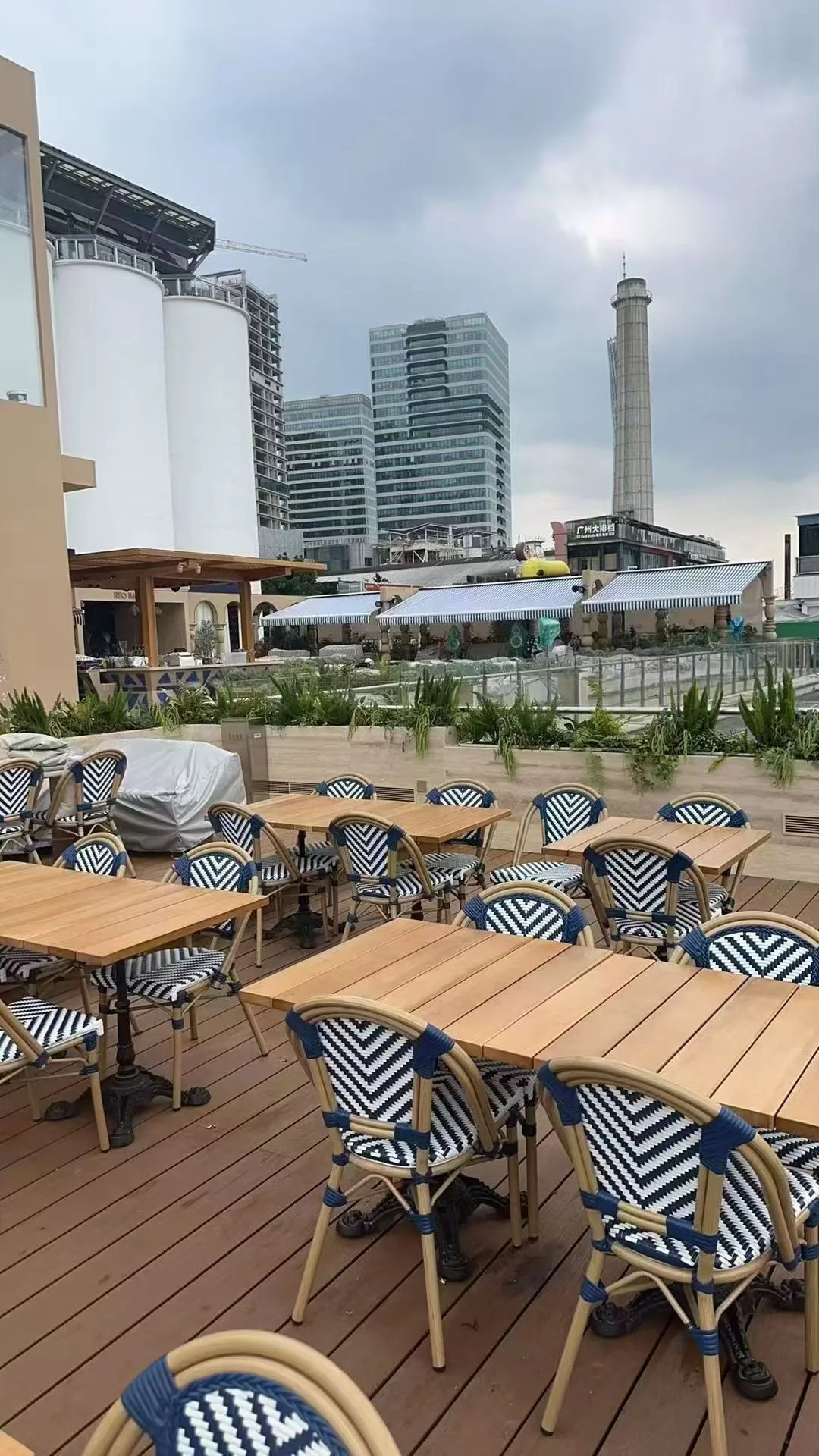
A LONGG customer furniture project with coordinated outdoor tables and woven seating.
Plan for receiving and after-sales support before placing the order
Agree on how the shipment will be checked when it arrives. Your receiving team should know who counts the cartons, records visible damage, photographs affected pieces, and contacts the supplier within the applicable claim period.
Discuss replacement parts and any spare items worth ordering with the main shipment. Glides, hardware, or an extra upholstered component may be easier to plan for before dispatch than to source urgently later.
LONGG provides a five-year warranty. Request the written terms for your order and confirm how a covered issue would be handled, including any responsibilities for freight or labor. The warranty period matters, but so does the practical process for getting the furniture back into service.
Build your quotation around the restaurant
For a planned U.S. restaurant project, sourcing from China can combine factory-direct purchasing, coordinated customization, and door-to-door delivery support. The advantage is strongest when the furniture, budget, and delivery requirements are agreed together.
LONGG is based in Guangzhou and has supplied furniture to customers in more than 30 countries since 2016. To start your project, send LONGG your furniture list or floor plan, quantities, preferred finishes, U.S. delivery ZIP code, and target opening or renovation date.
Ask for an itemized furniture quotation and a clearly defined door-to-door service scope. You can then evaluate the complete project, from approved design to delivery, with fewer assumptions and a clearer budget.