
Used restaurant furniture can be good value when its condition, fit, and collection costs are known. New furniture can be the better choice when a project needs coordinated quantities, specific dimensions, documented specifications, or repeat orders. Compare the cost of usable furniture in the dining room, including repairs and delivery, rather than the advertised purchase price alone.
The right answer may be a mixed purchase. A small cafe could use inspected secondhand tables while ordering new seating that meets its particular layout. Another venue may find a complete used set that already fits. Neither age nor purchase channel settles the decision.
Define the same required result for both options
Write down the quantities, dimensions, appearance, intended use, and date the furniture is needed. Include any project-specific documentation requirements and the number of matching replacements you may need later. Compare each offer against that list.
A used lot containing more pieces than you need is not automatically a bargain. Some may require repair, fail to fit the room, or differ from the photographed sample. Likewise, a new quotation with custom options you do not need may be solving a more expensive problem than your venue actually has.
Start with the practical restaurant furniture buying guide if the brief is still unclear. This comparison focuses on acquisition condition and total cost, rather than ranking suppliers or repeating a general buying checklist.
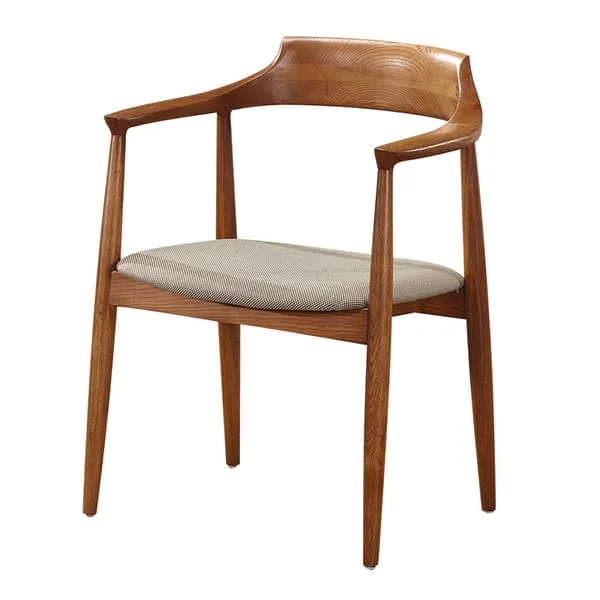
Build a total-cost comparison with visible assumptions
| Cost line | Used purchase | New purchase |
|---|---|---|
| Furniture | Lot price and usable quantity after inspection. | Confirmed specification, quantity, and customization. |
| Inspection and preparation | Condition review, cleaning, and any specialist assessment. | Samples, specification review, and agreed inspection. |
| Repairs or setup | Parts, refinishing, upholstery, and repair labor. | Assembly, installation, and any site adjustments. |
| Transport | Collection, packing, handling, and destination access. | Packing, freight, unloading, and destination access. |
| Later needs | Matching availability and component identification. | Reorder terms, batch variation, and parts availability. |
| Operational disruption | Time awaiting repair or sorting unsuitable pieces. | Time awaiting delivery or correction of an issue. |
Do not enter zero for an unknown expense. Mark it for a quotation or inspection. If you estimate staff labor, use your own expected hours and internal cost. Keep assumptions separate from supplier prices so another reviewer can understand the comparison.
A useful working calculation is purchase plus inspection, preparation, repair, transport, installation, and expected follow-up costs, less any documented recovery value. The result is a planning estimate. Avoid assigning an arbitrary resale value or assuming a fixed lifespan simply to make one option appear cheaper.
Inspect the used pieces that you would actually receive
Confirm that the photographs represent the lot being offered. Count matching items and record visible differences in size, finish, upholstery, and base configuration. Ask to inspect more than the best-looking sample, especially where items have come from several locations.
For chairs, inspect joints, frame damage, seat and back connections, glides, and upholstery condition. For tables, check the top, mounting system, column, floor base, and leveling components. Note repairs already performed and ask for any available model information or instructions.
Stains and cosmetic scratches may be acceptable if you understand the cleaning or refinishing work. Structural movement, cracks, or uncertain modifications need a qualified assessment before use. A fresh coat of paint does not establish that the underlying furniture is sound.
Calculate cost per usable piece carefully
Suppose an illustrative lot contains 40 chairs, but inspection identifies only 32 ready for the intended use. Divide the total acquisition and preparation cost by those 32 usable chairs when comparing immediate seating capacity. Assess the remaining eight separately instead of assuming they will become usable at no cost.
This is a counting example, not a claim about typical secondhand rejection rates. If repairs are feasible, add their verified cost and schedule before changing the usable quantity.
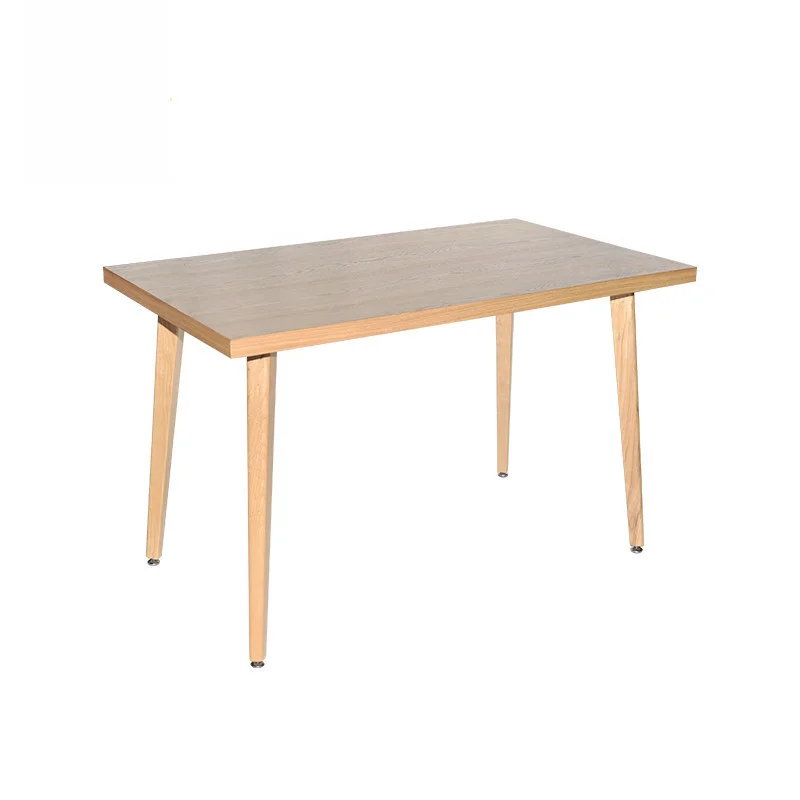
Put repair work into the schedule as well as the budget
Ask a suitable repairer to assess the actual furniture before committing where significant work is needed. Upholstery replacement can involve foam, support, seams, and labor beyond the visible covering. Refinishing may require disassembly and time for the finish process before the furniture returns to use.
Keep repair responsibilities clear. Decide who buys replacement glides or hardware, who approves the result, and where work takes place. If the pieces cannot be brought to the required condition within the available time, their low purchase price does not solve the opening requirement.
New furniture also needs realistic scheduling. Drawing approval, samples, production, transport, and assembly can each take time. Request current commitments for the specific order rather than relying on a generic delivery statement.
Transport can change the comparison
Used furniture may be available locally, reducing some logistics steps, but collection can still require packing, lifting equipment, labor, and suitable vehicles. Check access at both ends. A seller's ground-floor collection arrangement is different from moving furniture through a narrow restaurant staircase.
For either option, record packed or protected dimensions, weight, unloading arrangements, and storage needs. Confirm who handles visible damage or missing parts and what evidence is required. Compare the same destination service rather than a pickup price against a delivered quotation.
Matching later may matter more than matching today
A used set may be ideal for a one-room venue that accepts variation. It can be harder to extend if the model is discontinued or unidentified. New furniture may offer a documented reorder path, but future availability and exact color matching still need confirmation.
Ask for product codes, finish references, and replacement-part information wherever available. Natural materials and different production batches can vary. A promise of future support is useful only when the terms and practical ordering process are clear.
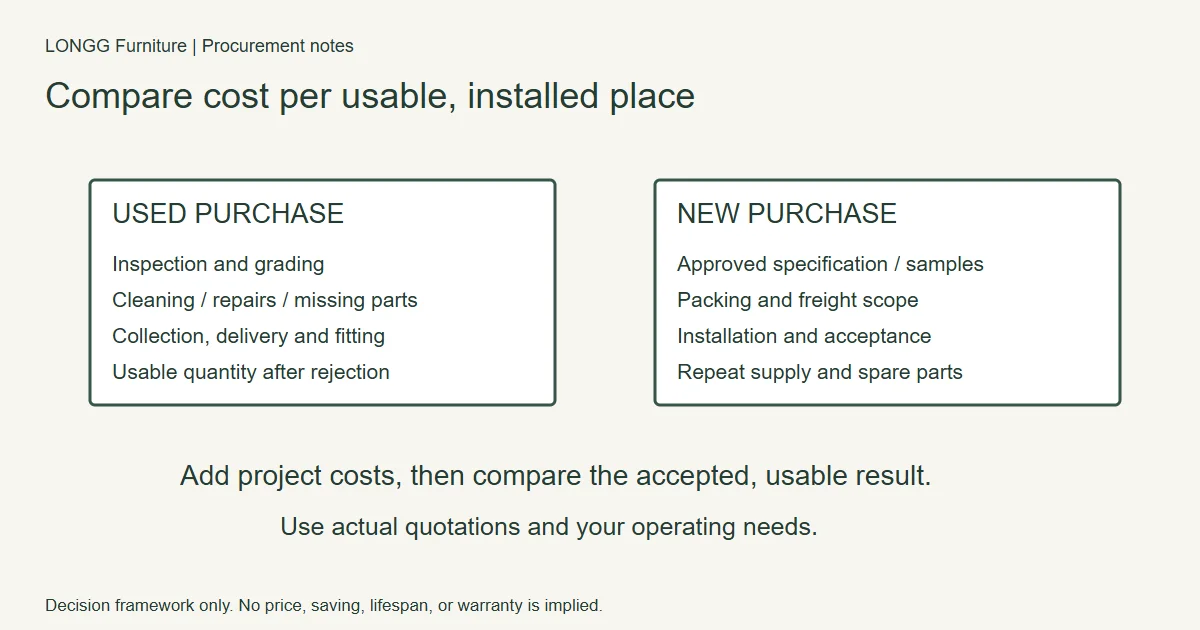
Choose the option that fits the project
Used furniture deserves serious consideration when the available lot fits, inspection is practical, repairs are manageable, and timing works. It can also support a deliberate mixed or vintage interior without requiring a uniform new collection.
New furniture may fit better when custom dimensions, coordinated larger quantities, or documented specifications are central to the project. Review seating options and table configurations against those requirements instead of assuming new products are automatically the lower-risk choice.
Can used and new furniture work together?
Yes. Check finished heights, chair access, finishes, and maintenance across the combined arrangement. Use a sample grouping before ordering the new pieces. A visual match alone does not establish that the tables and chairs work comfortably together.
LONGG Furniture supplies new custom furniture, so this is a supplier's purchasing framework rather than an independent price study. Request a comparable new-furniture proposal using the same quantities, dimensions, destination, and scope as your used option. Make the decision from inspected condition and documented costs, with unresolved items still visible.