
Replacement restaurant table tops make sense when the existing bases are sound, identifiable, and compatible with the new tops. Before ordering, check each base, record the current mounting arrangement, compare old and new weights, and calculate the finished table height. Keeping the base is a decision to verify, not an automatic saving.
A new top can refresh the room, but it can also expose a loose column, weak connection, or awkward seating position that was already present. Begin with an inventory of the actual tables rather than ordering from the dimensions of a single example.
Sort the existing tables into matching groups
Assign a table or base ID and photograph it from above, below, and at floor level. Record the top dimensions, base model if known, column height, floor footprint, glides, and mounting plate. Group tables only when their components actually match.
A dining room may contain several generations of replacements that look alike from above. Different plate patterns, column heights, or adapters can be hidden underneath. Note those differences now so the new tops do not arrive with one hole pattern intended for every table.
Identify which pieces must remain in service while work proceeds. Your replacement schedule should account for storage, assembly space, and a place to hold tables awaiting inspection. This is a refurbishment sequence rather than a new furniture layout.
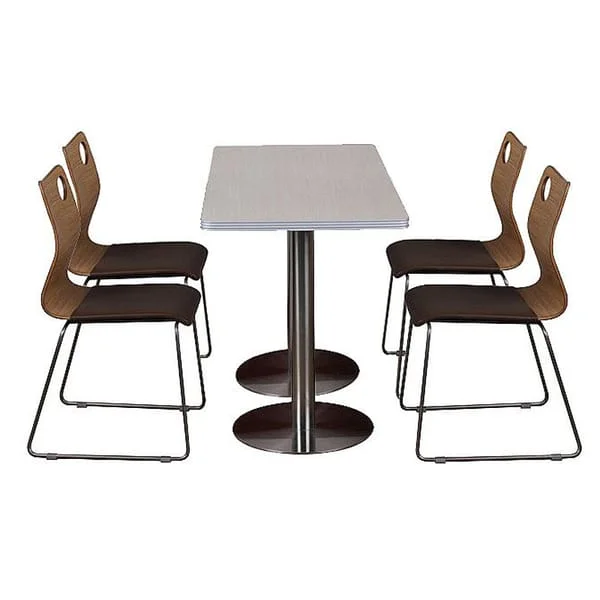
Inspect the base before spending money on a new top
Check for damaged welds, cracks, corrosion, distorted parts, missing glides, loose column connections, and damaged fasteners. Inspect the mounting plate and any sub-top for movement or deterioration. If a structural concern is found, remove the table from service and obtain a qualified assessment.
Cosmetic wear and structural damage are different findings. A scuffed cover may be acceptable to refinish; a cracked connection requires a different response. Do not hide uncertainty under a new top or assume that tightening one visible bolt resolves every movement.
| Existing condition | Next decision |
|---|---|
| Identifiable, sound base with complete documentation | Request compatibility confirmation for the new top. |
| Missing glide or serviceable hardware | Obtain the correct replacement and reassess the assembly. |
| Unknown model or mounting details | Send measurements and photographs for technical review. |
| Crack, distortion, serious corrosion, or persistent movement | Keep out of service pending assessment; compare complete replacement. |
For a broader inspection and approval record, refer to the pre-order furniture checklist. Here, the important boundary is whether each retained component is worth building around.
Compare more than the old and new outline
Record the finished weight of both tops, including backing boards and mounting components. The same diameter does not mean the same load on the base. Moving from a relatively light construction to a heavier surface may change the assembly's stability and handling.
Changing shape can matter even when the overall dimensions seem similar. A rectangular corner or longer end extends the surface differently from a round top. Identify any increase in overhang and ask the supplier to review the complete proposed combination.
Tablebases.com's guidance for heavy tops emphasizes the relationship between top weight, height, and base configuration. Use the same questions when discussing an existing base, but do not treat a generic chart as approval for an unidentified assembly.
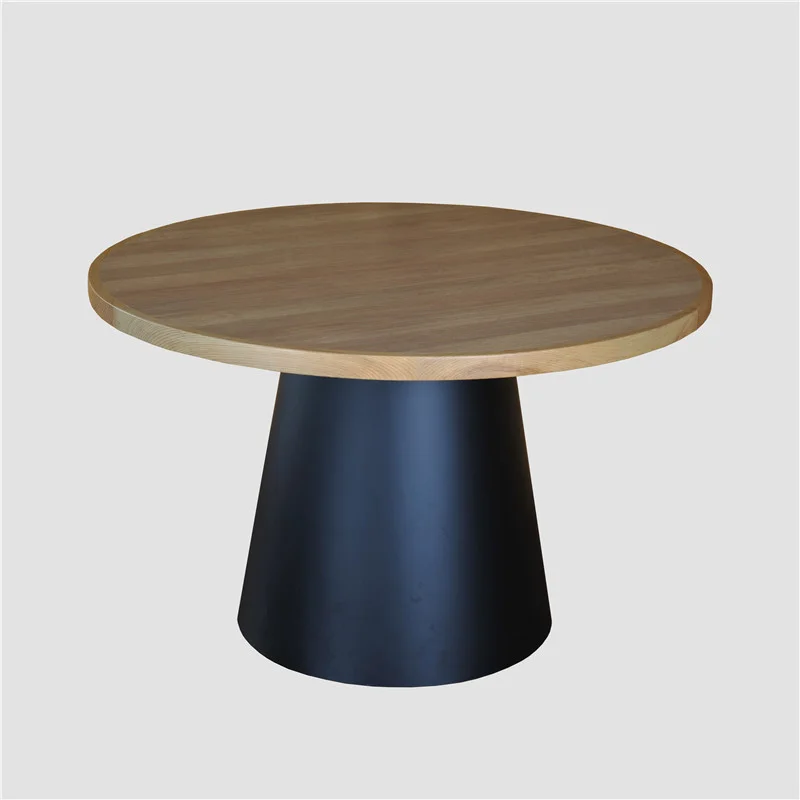
Document the mounting interface accurately
Measure plate dimensions and hole centers, and identify whether the old top uses screws, inserts, a sub-top, or another connection. Photograph a ruler alongside the pattern, but provide a dimensioned drawing too. A photograph alone can distort distances.
Confirm what remains with the base and what arrives with the new top. The replacement may need an adapter or a different attachment method. Any such change requires approval from the responsible supplier or fabricator; matching a few existing holes is not proof of compatibility.
Do not reuse old screws by default. Length, diameter, thread type, engagement, and the condition of the receiving material all matter. Screws suitable for the old construction may damage a thinner top or fail to hold correctly in a different core.
Stone and thin surfaces need planned connections
If the replacement uses a fabricated stone or sintered surface, ask for the approved mounting system and installation instructions. Do not drill, rout, or bond components on site based on an assumption that all tops accept the same method. The fabricator should confirm the complete interface before production.
Keep the quotation clear about who supplies the hardware, who performs installation, and who verifies the finished table. An unresolved attachment detail can erase the expected benefit of retaining an otherwise usable base.
Recalculate the finished height and underside space
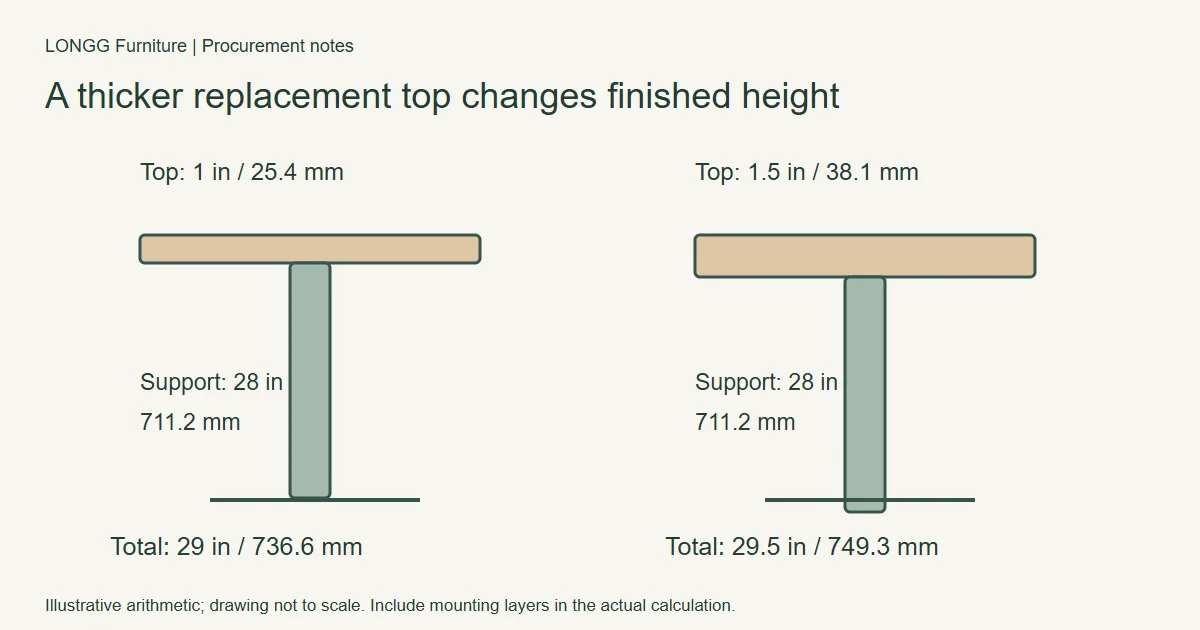
Measure from the floor to the support surface, then add the complete new top assembly above it. Include any adapter or sub-top once, avoiding double-counting components already included in the base height. Compare the result with the old table and the actual chairs.
For illustration, an unchanged support height of 28 inches plus a 1-inch top produces a 29-inch table. Replacing that top with a 1.5-inch assembly produces a 29.5-inch table: 749.3 millimeters instead of 736.6 millimeters. The difference is 12.7 millimeters. These are example dimensions, not a recommended configuration.
Also check the lowest underside obstruction. A new mounting board may reduce knee clearance even when the top surface changes only slightly. Armrests, booth cushions, and table linking arrangements can all be affected. Review the seating used with the tables during the trial assembly.
When is a complete new table the better choice?
Compare top replacement with complete replacement after including inspection, repairs, adapters, hardware, assembly, removal, and downtime. Retaining a sound, documented base can be sensible. A group of mismatched bases needing extensive work may offer less value than the top-only price suggests.
Consider visual consistency as well. If the bases have different heights or finishes, new matching tops may make those differences more obvious. Decide whether that variation is acceptable instead of discovering it after installation.
Use the complete table collection as a comparison option, not a predetermined outcome. Keep the intended top size and use conditions consistent so the two proposals solve the same operating problem.
Approve a pilot replacement before ordering the batch
Select one representative base from each verified group. Assemble the proposed top using the approved method, then check finished height, seating access, leveling, and the connection. Have the responsible party assess the assembly before returning it to service.
Once approved, record the exact top revision, hardware, installation method, and base IDs covered by that decision. A pilot on one model does not validate a different base elsewhere in the room.
Can I order by tabletop diameter alone?
No. Supply the construction, weight, underside connection, and intended final height as well. If the old base model cannot be identified, flag it for review rather than guessing its capacity from its appearance.
Send LONGG Furniture the replacement inventory, underside photographs, measurements, quantities, and installation schedule. Ask the response to distinguish confirmed compatible replacements from combinations that still need assessment.