
A metal frame can look reassuringly strong in a catalogue. A solid-wood chair can feel substantial on the showroom floor. Neither impression settles the decision for a restaurant that needs its seating to survive busy service, daily cleaning and repeated moves.
The search for heavy-duty restaurant chairs often begins after something has become frustrating: backs that bend, joints that loosen, seats that are difficult to clean, or furniture that makes every room change feel like hard work. Replacing wood with metal, or buying a heavier version of the same design, may leave the real problem untouched.
Wood and metal can both work well in commercial dining rooms. The more useful comparison connects the construction of a particular chair to the way the restaurant operates. A bakery with frequent spills, a restaurant serving long dinners and a room regularly cleared for private events do not necessarily need the same solution.
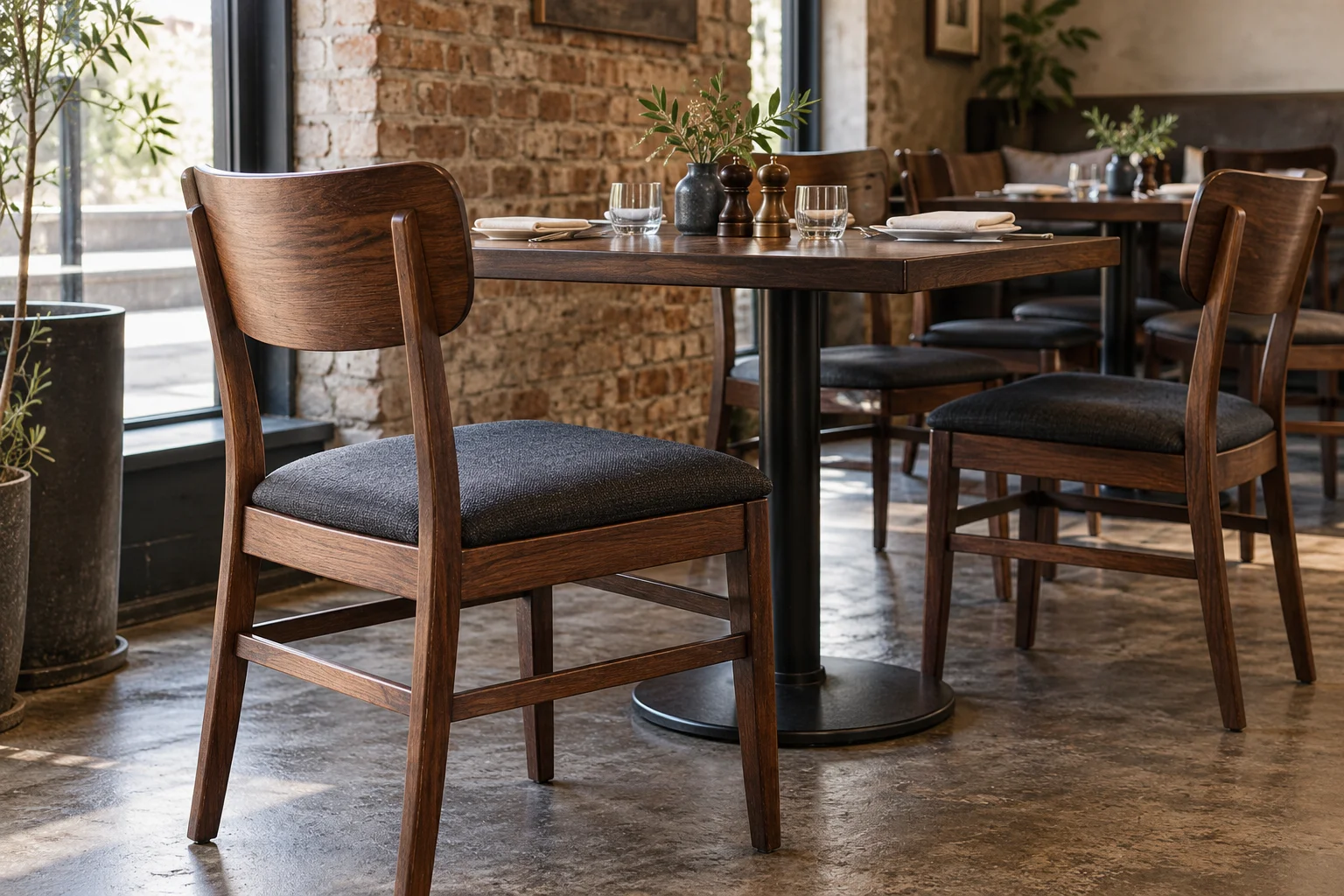
The right chair balances the dining experience with the work of moving, cleaning and maintaining it.
Durability starts with the frame, not the material label
Wood restaurant chairs bring grain, finish and a warmer visual character to the room. Their construction deserves attention beneath the seat, where rails, legs and supports meet. The design and execution of those connections matter more than the words “solid wood” on their own. A substantial-looking leg cannot compensate for a poorly performing joint elsewhere in the frame.
Metal restaurant chairs offer different construction options, including welded frames and mechanically fastened assemblies. Welding does not make a chair indestructible, and the presence of bolts does not automatically make it weak. The frame geometry, material specification and connections work together. A slim metal back may look similar across several models without offering identical performance.
This is why a wood-versus-metal durability comparison needs to reach the model level. Neither material is a universal winner. Intended use, construction details and relevant evidence for the actual chair are a stronger basis for a purchase than assuming that all metal chairs outlast all wooden ones.
Once furniture is in service, movement also needs to be understood rather than hidden. An uneven floor or missing glide can cause rocking; a loose frame is a separate concern. Thonet’s furniture care guidance distinguishes issues such as worn glides, loose connections and damaged welds, and advises removing suspect furniture from use. A structural fault calls for appropriate assessment, not another improvised support under a leg.
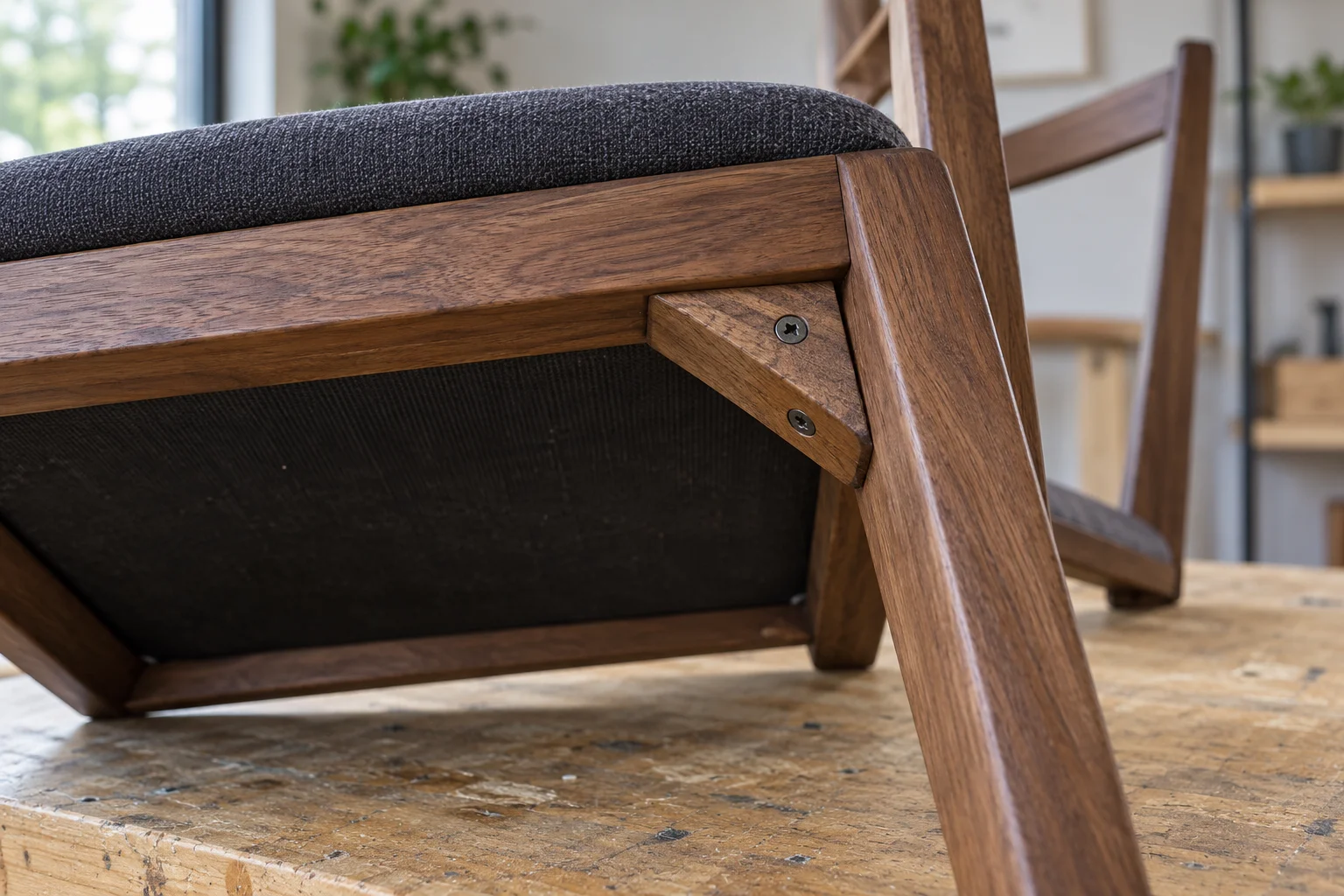
The underside reveals connections that a front-facing product photograph leaves out.
The seat has to suit the meal and the cleaning routine
A strong frame is only part of a usable chair. Seat depth, back shape and the relationship between the seat and table affect how it feels to sit and eat. A chair that seems acceptable during a brief showroom visit may feel different over a full meal. Upholstery can provide cushioning, but padding alone cannot correct an awkward seat profile or table-height mismatch.
A café serving quick breakfasts may favour a simple seat surface that staff can wipe between guests. A restaurant built around longer dinners may place more emphasis on support and cushioning. These are operating preferences rather than rules: an unupholstered chair can be comfortable, and an upholstered one can still be poorly suited to its setting.
Spills bring another trade-off. Seams, textured coverings and the junction between the seat and back can make some designs more laborious to clean. The relevant detail is how the selected upholstery and finish tolerate the restaurant’s actual cleaning products and methods. A general promise of “easy cleaning” offers little help when the material’s care instructions do not fit the daily routine.
A separately replaceable seat can be valuable when the covering wears before the frame. That advantage depends on the replacement being available in the correct size and attachment arrangement, with an acceptable material match.
Frequent room changes make handling part of the specification
A dining room that hosts private events puts furniture through a different routine from one that keeps the same layout throughout the week. Staff lift chairs, move them into storage and bring them back. Weight, grip and storage space become part of the buying decision rather than details discovered after delivery.
Heavy does not necessarily mean heavy-duty. Extra weight can make repeated moves harder without establishing anything about joint quality or service life. Equally, a lighter chair still needs construction suited to its intended use.
Stacking introduces its own requirements. Chairs need to be designed for it, with model-specific limits and handling instructions. Two seats that physically fit together are not necessarily a suitable stack. Contact points can affect finishes and upholstery, while the shape and stability of the stack affect how practical it is to store. A chair that performs well at the table may still be the wrong choice for a room cleared every evening.
Small feet make a noticeable difference on the floor
A chair can scrape, catch or sound harsh when moved even while its frame remains sound. The glides at the bottom of the legs are easy to overlook in a quotation, yet they form the contact between the furniture and the restaurant’s floor.
The appropriate glide depends on both the chair and the surface. Carpet and hard flooring create different requirements, and a replacement that is roughly the right size may not fit securely. Emeco’s glide guidance, for example, distinguishes model-specific fittings and different floor applications. That is a useful purchasing principle, rather than a reason to assume one universal pad will suit every dining room.
Matching replacement glides and their availability belong with the chair specification. They make an ordinary wear item easier to deal with before it becomes a repeated source of floor contact problems.
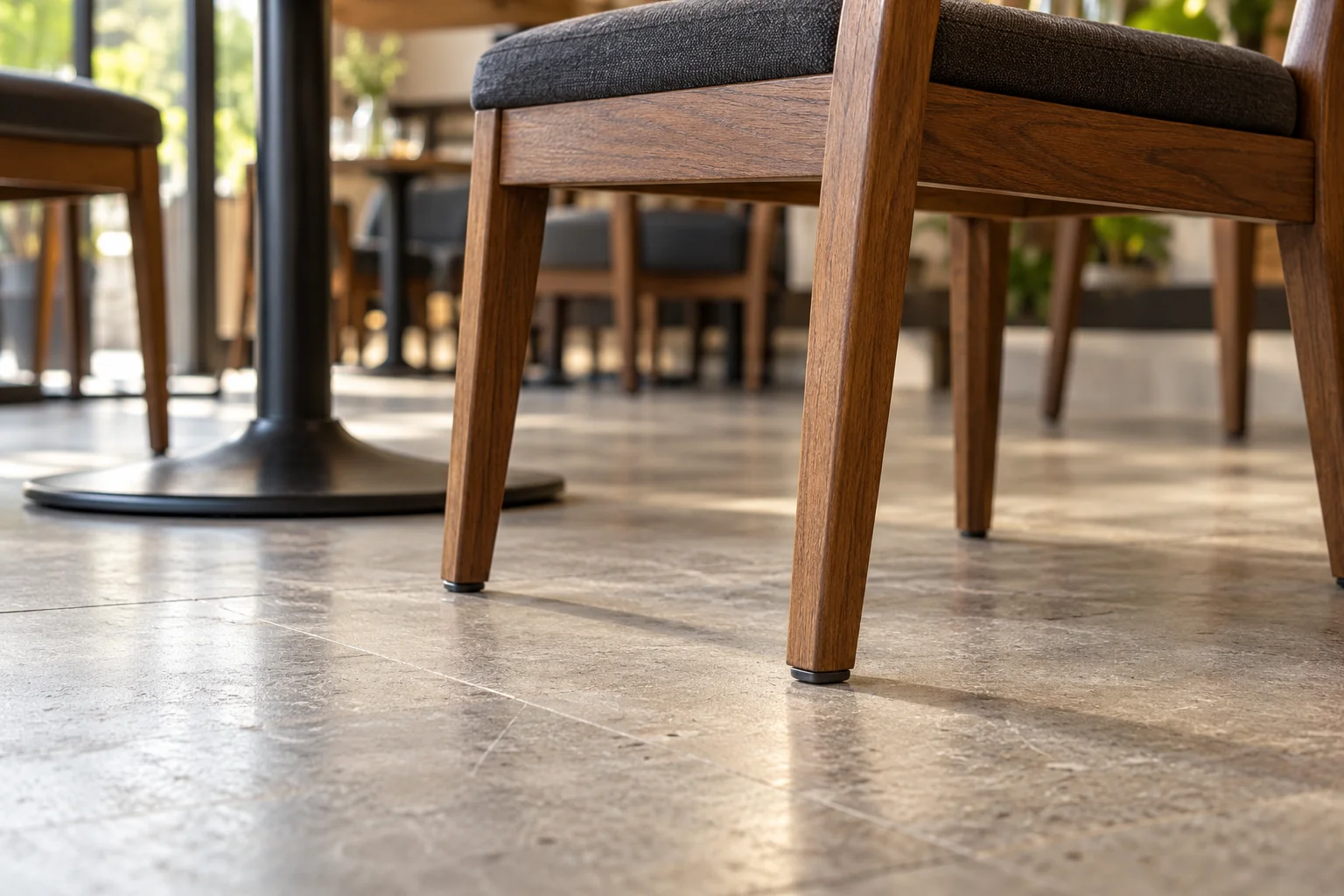
Glides need to fit the chair securely and suit the floor beneath it.
A useful sample represents the chair being ordered
The sample brings these decisions together: frame construction, sitting comfort, handling, finish and floor contact. Its value increases when a written specification records exactly what production should match. Otherwise, an approved appearance can leave important details unresolved.
A short trial cannot establish years of durability. Test evidence, when provided, needs to relate to the relevant model and configuration, with its scope understood. A report for another frame or seat arrangement should not silently stand in for the chosen chair.
The strongest brief for commercial restaurant seating therefore describes the room as well as the style. LONGG welcomes seating enquiries with the planned layout, service pattern and material preferences, so wood and metal options can be discussed against the same practical requirements.