
Custom restaurant booth seating cost depends on what is being built, how often that design repeats, and what the supplier must deliver beyond the finished seat. A useful quote separates the booth specification from development, packing, transport, and installation. Two offers are comparable only when those boundaries match.
Start with a schedule of booth types and quantities, even if some finishes are undecided. A price for one straight wall bench cannot reliably predict a curved corner booth with exposed backs, patterned upholstery, and removable panels. Ask suppliers to identify assumptions before treating a preliminary figure as your purchasing budget.
First, agree on what one quoted unit means
Booths may be priced by complete module, seating bay, or linear length. Each method can be useful, but the unit needs a definition. A linear measurement should say where it is taken, whether corners count, and whether end panels are included. A seating bay should identify every bench and table supplied.
Give each configuration an item code. For example, B01 might describe a straight wall bench, while B02 identifies a curved return. This is an illustrative schedule, not a product specification. Record overall dimensions, quantities, exposed sides, and fixing arrangements beside each code. Use the existing booth dimensions and layout guide to settle the seat-and-table relationship before pricing it.
A quotation marked “four-seat booth” can still leave important questions open. Does it include both facing benches? Is the back finished on both sides? Is the table included? Resolve those questions in the description instead of trying to correct the total afterward.
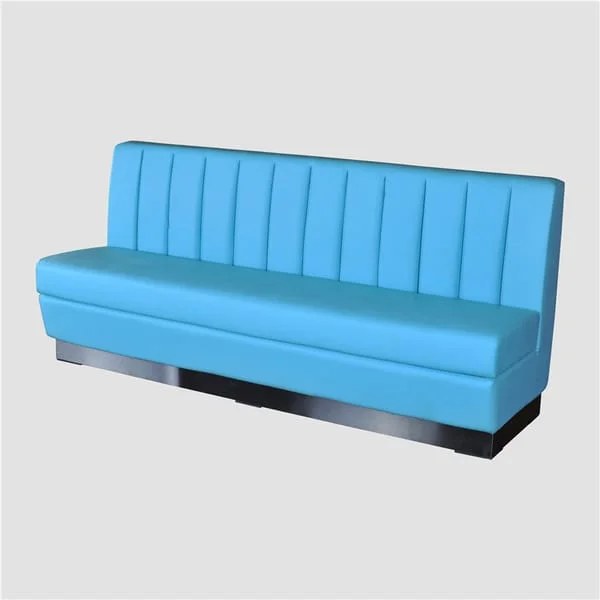
What changes the manufacturing cost?
| Specification decision | Why it changes the work | How to compare offers |
|---|---|---|
| Straight or curved construction | Curves can require different framing, patterns, and upholstery work. | Use the same plan and section drawing. |
| Plain, channeled, or tufted back | Decorative details add cutting, sewing, alignment, and finishing steps. | Identify the pattern and its spacing. |
| Visible back and ends | Freestanding modules need finished surfaces that a wall bench may conceal. | Mark exposed faces on the plan. |
| Upholstery and cushions | Material yield, pattern repeat, foam, and seat support vary. | Specify material codes and cushion construction. |
| Removable sections | Separate panels need attachment hardware and service access. | Identify what can be replaced independently. |
Frame construction should be described separately from the visible upholstery. A larger back, unsupported end, or unusual shape may need additional structural development. A change that looks minor in a rendering can affect the internal frame and the way the booth is packed.
Fabric consumption is another frequent source of differences. Large repeats and directional patterns can create more offcuts than a plain material. Customer-supplied upholstery may also require receiving, inspection, handling, and an agreed allowance for cutting. Confirm usable width, pattern direction, and responsibility for shortages.
Quantity matters at the design level
Twenty identical modules and twenty individually sized modules are different manufacturing orders. Repeated parts can share drawings and production setup. Individual sizes, finishes, and handed corners may need separate records and checks. Ask for the effect of standardizing a module, rather than assuming a larger total quantity automatically produces a particular discount.
Review booth and banquette configurations as starting references. The quote should name the exact version being supplied, including any differences from the reference image.
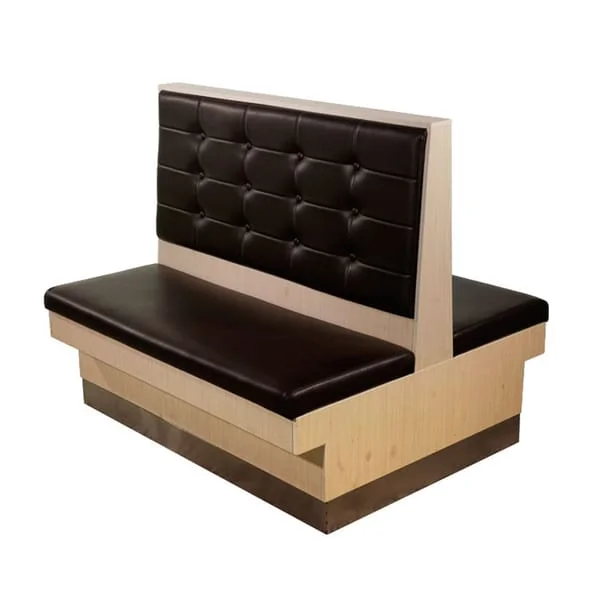
Separate the furniture price from the delivered project cost
Ask for line items covering drawings, material samples, a full-size prototype if required, production, packaging, and spare parts. State whether sample charges are standalone costs or subject to any later credit. Never assume that a prototype, revisions, or a particular inspection service is included.
Large assembled booths may occupy more shipping space than smaller modules. Dividing a run into sections can change carton sizes and site access, but it also introduces joints and installation work. Request packed dimensions and gross weights for the proposed configuration before comparing transport offers.
Delivery terms need a named destination or handover point. Unloading, storage, movement through the building, assembly, fixing, and packaging removal should each have an owner. The ICC's Incoterms resources explain the role of trade terms; they do not replace a written furniture specification or installation scope.
Keep the freight allowance separate when the shipment date or packed volume remains uncertain. Record quote validity and the assumptions behind each allowance. An apparently complete total can still omit local handling or site work.
Where can you reduce cost without losing the design?
Begin with repetition and decorative complexity. Keeping a common seat module, using fewer upholstery combinations, or reserving elaborate backs for a focal area may simplify production. Ask for each alternative to be priced against the same baseline so you can see what actually changes.
Do not trade away access needed for installation or future repairs merely to remove an initial line item. A replaceable seat panel may cost more to build but could make a localized repair easier. Its value depends on the actual replacement method and parts availability, not an assumed service life.
Review physical finish and upholstery samples before rejecting an alternative. A less complicated seam layout may preserve the intended appearance better than substituting an untested covering that only looks similar on screen.
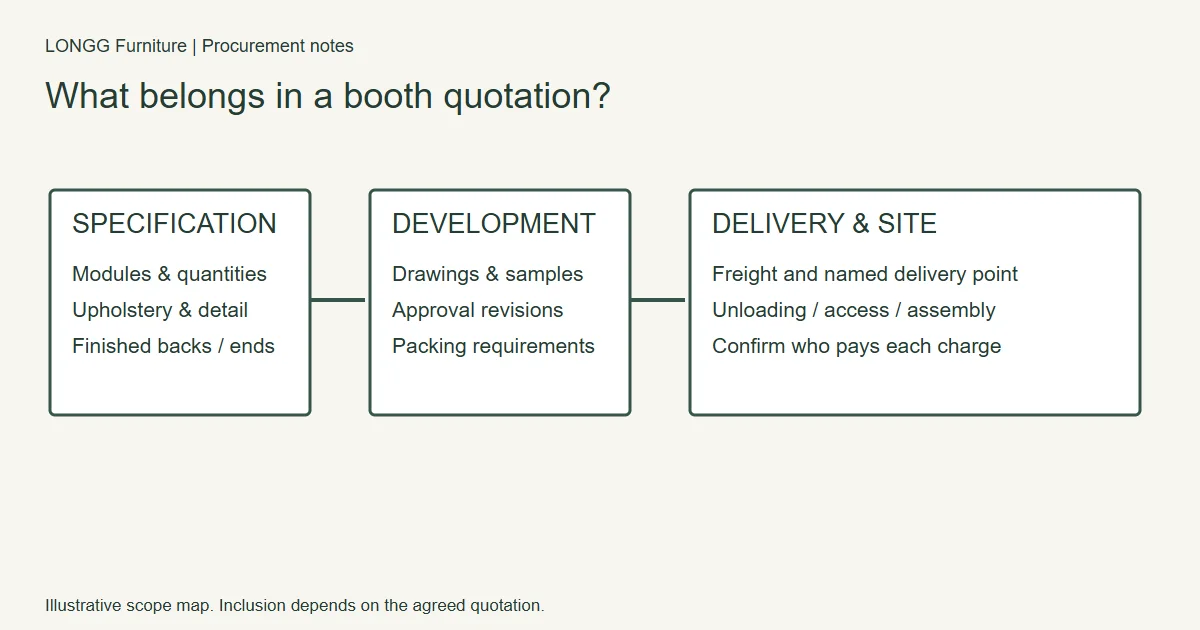
Use a quote comparison sheet with visible open questions
Put the drawing revision, material codes, quantity, unit definition, included services, exclusions, and delivery scope on one sheet. Mark unknown items “not confirmed” rather than entering zero. Where a supplier offers an alternative, put it on a separate line so it cannot silently replace the requested specification.
For example, one illustrative offer might include finished rear panels and removable seats, while another assumes a wall-hidden back and permanently upholstered seats. Their unit prices describe different products. Request aligned revisions before deciding which offer is better value.
Can I request a budget quote before the floor plan is final?
Yes, provided it is clearly preliminary. Supply approximate runs, configuration references, quantity, finish direction, destination, and known site constraints. Ask the supplier to list the dimensions and selections that would trigger repricing. Reconfirm the quote after the final site measurements and drawings are approved.
Should tables be included in the booth quote?
Include them when you want a coordinated package, but show them as separate items. This makes the booth scope clear and lets the team verify table quantity, base position, and finished height without confusing those costs with the seating.
To request a project-specific proposal from LONGG Furniture, send the booth schedule and marked floor plan, together with reference images, preferred materials, destination, and required installation window. Identify unresolved choices so the response can distinguish firm specifications from allowances.