
Wood, laminate, and stone restaurant table tops suit different operating routines. Solid wood offers natural variation and potential refinishing; laminate offers a decorative surface whose edges and core need protection; stone requires a more specific choice between natural stone, engineered quartz, and sintered stone. Compare the complete top, not just its surface pattern.
The best starting point is your menu and cleaning routine. A breakfast cafe dealing with coffee and crumbs asks different things of a table than a restaurant serving citrus drinks, oily shared dishes, and hot serving vessels. Write down those exposures before choosing a finish from photographs.
Identify what is underneath the finish
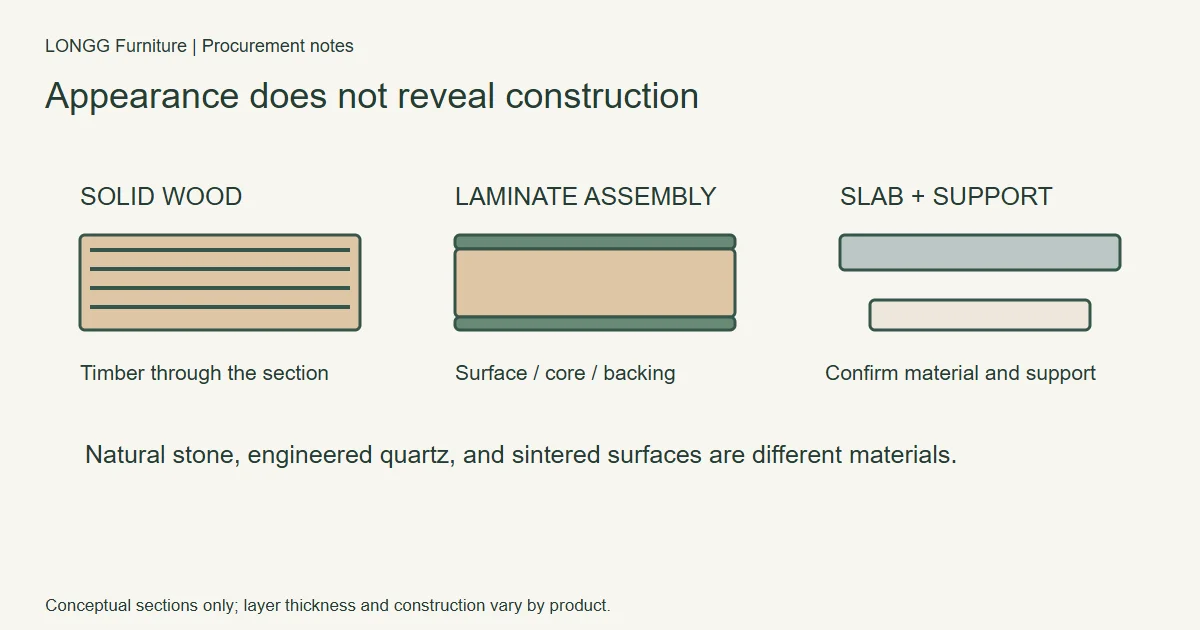
A wood-look surface may be solid timber, veneer, or printed laminate. A marble-look surface may be natural marble, engineered quartz, sintered material, or a decorative laminate. Those names are not interchangeable. Ask for a section drawing or sample showing the surface, core, backing, edge, and attachment area.
For HPL bonded to a wood-based core, check how the edge and underside are sealed. Compact laminate is a different construction from a thin laminate sheet bonded to particleboard or MDF. Outdoor suitability must be stated for the complete assembly rather than inferred from the word “laminate.”
Compare the demands of daily restaurant use
| Material | What staff should watch | What to confirm before ordering |
|---|---|---|
| Solid wood | Spills, finish wear, dents, and changes in humidity. | Species, finish, movement allowance, and refinishing method. |
| HPL on a core | Standing water at seams, chipped edges, and direct heat. | Core, edge detail, backing, and approved cleaners. |
| Natural stone | Stone-specific staining, etching, and edge impact. | Actual stone, finish, sealing advice, and repair options. |
| Engineered quartz | Heat exposure, chemical compatibility, and edge damage. | Brand and series, care limits, thickness, and support. |
| Sintered stone | Edge impacts, support details, and finish-specific cleaning. | Exact slab, fabrication details, and mounting system. |
Solid wood: decide how much natural change you accept
Solid wood has grain and color variation. It also responds to moisture in its environment. The US Forest Service Wood Handbook explains the relationship between moisture and dimensional change. A furniture design needs to accommodate that behavior through construction and attachment details.
For purchasing, ask how the top connects to the base and how the finish is maintained. Do not assume that every solid-wood top can be sanded repeatedly: thickness, edge details, inserts, and the finish system can limit repair. Veneer needs a separate assessment because its decorative wood layer is much thinner.
Consider the appearance you want after ordinary use. Some venues welcome small marks as part of a timber surface; others expect a uniform finish across every table. Agree acceptable variation and repair expectations before approving wood table options. A sample should represent both the finish and the construction being quoted.
Laminate: examine the edge as carefully as the face
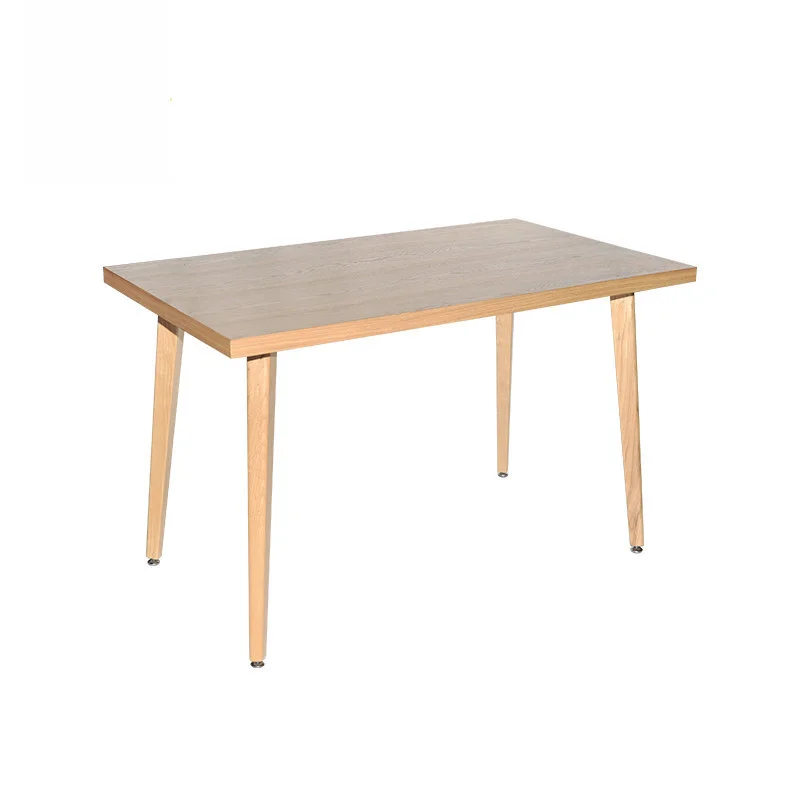
Laminate can provide consistent colors and patterns across a dining room. Its face may be straightforward to wipe, while the junctions around that face need closer attention. An exposed or damaged core can react differently from the decorative surface.
Formica's use and care guidance cautions against flooding seams and placing hot cookware directly on laminate. Apply the selected manufacturer's instructions to the actual product. A material's easy-clean description is not permission to soak edges or use any kitchen chemical.
Ask how edge banding, molded edges, or other edge systems are attached and repaired. Check corners where chairs or cleaning carts may strike. A damaged laminate face usually cannot be refinished like solid timber, so establish whether a local repair is acceptable or whether a replacement top would be needed.
Natural stone, quartz, and sintered stone are three decisions
Natural stone
Marble, granite, and quartzite do not share identical care requirements. Calcareous stones such as marble are sensitive to acids, which can change the surface finish. A stain and an etch mark are different problems. The Natural Stone Institute's care guidance also explains that sealing improves stain resistance rather than making stone stain-proof.
For a restaurant serving lemon drinks or wine, discuss the chosen stone with the fabricator. Ask whether the intended finish, cleaning routine, and tolerance for visible change are compatible. Specify the actual stone and finish rather than “natural stone top.”
Engineered quartz
Engineered quartz combines mineral content with a binding system. It is different from natural quartzite. The precise composition and care limits vary by product. Caesarstone's quartz and mineral surface guidance calls for protection from hot cookware and cautions about chemicals.
Confirm whether the selected series is suitable for the proposed location, especially if tables will move outdoors. Do not transfer the performance or warranty terms of one branded surface to an unidentified quartz top.
Sintered stone
Sintered surfaces are manufactured through heat and pressure. Neolith describes its sintering process separately from resin-bound quartz construction. The category can offer useful surface properties, but the slab, finish, fabrication, and support still matter.
Protect exposed edges from hard impacts. Ask the fabricator how the edge profile and any supporting board are specified for a freestanding restaurant table. A thin-looking edge does not tell you the weight or the structure hidden beneath it.
Weight changes the way the restaurant handles tables
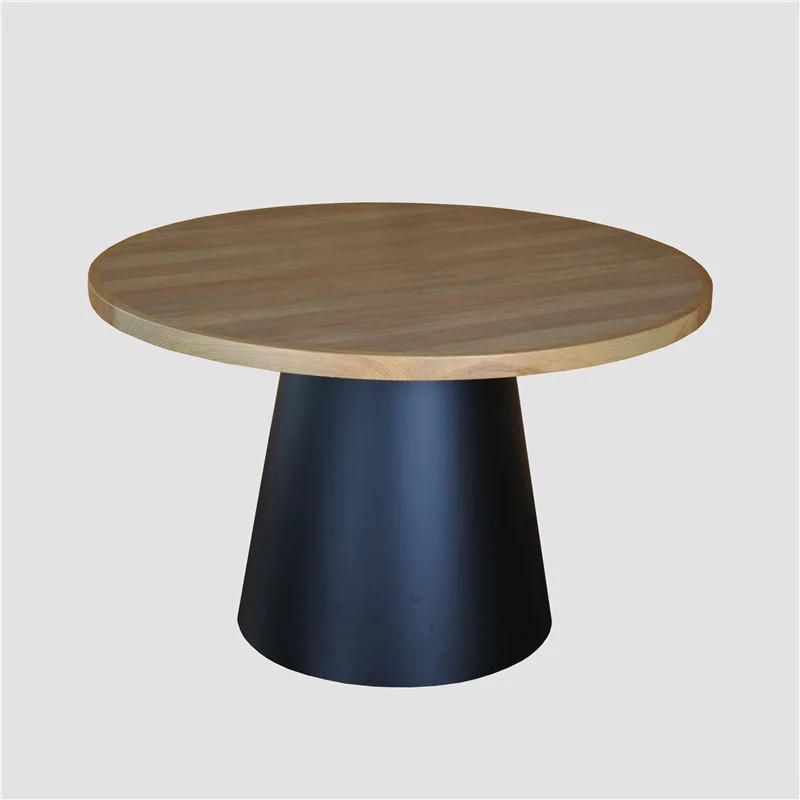
Compare the finished assembly weight, including backing and mounting components. A thin sintered slab on a substrate and a thick natural-stone top may have very different handling requirements. Staff who rearrange tables daily need a practical movement method as well as a surface they like.
Review stone table designs with their proposed bases. Material selection does not establish stability or safe load capacity. Obtain approval for the complete table configuration, and reserve questions about reusing an existing base for a separate compatibility review.
Approve a sample using your own service routine
Ask for a representative sample with the final edge and finish. With the supplier's agreement, evaluate typical spills using its approved cleanup procedure. Record the substances, contact times, cleaner, and visible result. This is a project comparison exercise, not a certification or a prediction of service life.
Include staff who clean and rearrange the dining room. Their questions about residue, edge joints, carrying, and repair access are often more useful than another color photograph. Keep the selected care sheet with the furniture schedule.
When discussing restaurant tables with LONGG Furniture, provide the menu style, indoor or outdoor location, cleaning products, movement frequency, and preferred appearance. Request the material identity and construction details alongside the sample, so the final choice can be repeated accurately across the order.