
Fabric and vinyl restaurant chairs should be compared against the spills, cleaning products, and sitting experience your venue expects. Fabric offers a wide range of textures and constructions; vinyl provides a coated surface that can be convenient to wipe. Neither label guarantees stain resistance, chemical compatibility, or a particular service life.
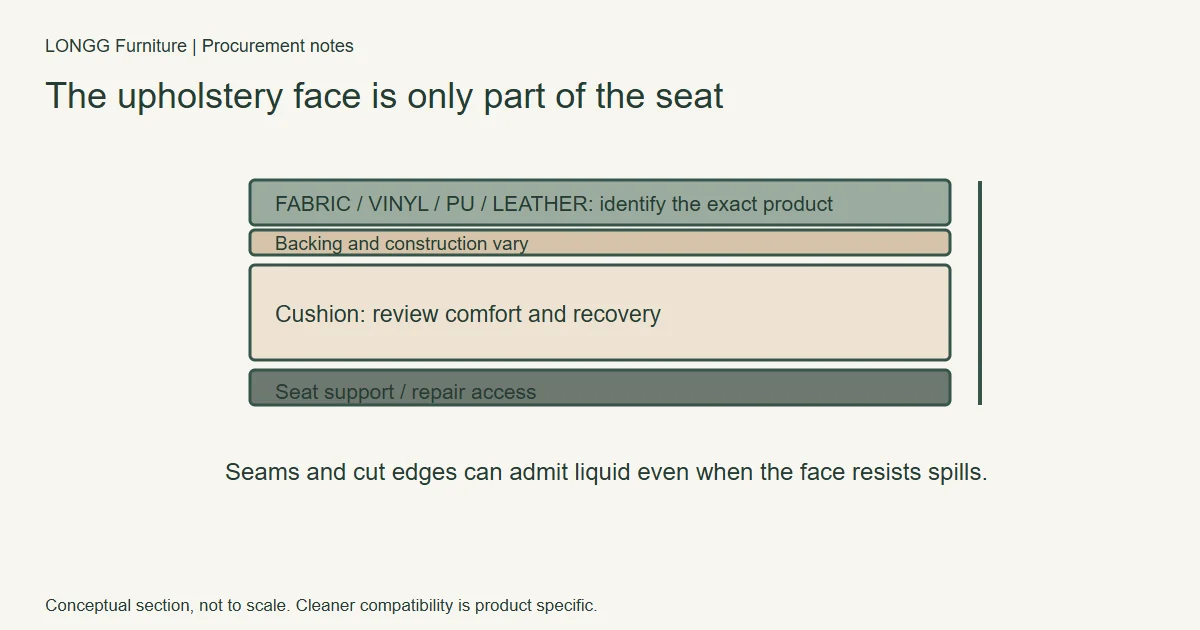
The useful decision is about a named upholstery product on a specific chair. The covering, seams, cushion, backing, and attachment method work together. A good swatch can still become a difficult chair to maintain if spills collect in deep seams or the seat cannot be repaired independently.
Vinyl, PU, and leather are not the same material
Vinyl upholstery generally refers to PVC-based coated material on a backing. PU upholstery uses polyurethane, sometimes as part of a multilayer construction. Natural leather is animal hide with a finish that can vary substantially. “Faux leather” describes an appearance category and does not identify a single composition.
Ask the supplier for the face material, backing, protective finish, product code, and care sheet. If a quotation says only “leather seat,” clarify whether it means natural leather, PU, or vinyl. Do not approve a substitution merely because the color and grain look similar.
| Covering | Daily-use consideration | Evidence to request |
|---|---|---|
| Woven fabric | Texture, absorbency, stain release, and drying depend on the construction. | Fiber content, treatment, cleaning instructions, and relevant tests. |
| Vinyl / PVC-coated material | Face wiping may be simple, but seams and approved chemicals still matter. | Exact product code, backing, coating, and cleaner compatibility. |
| PU-coated material | Performance depends on the polyurethane system and operating conditions. | Cleaning limits and relevant hydrolysis evidence. |
| Natural leather | Finish, variation, and care differ by leather type. | Leather specification, finish sample, and product-specific care. |
Comfort comes from more than the outer covering
Fabric can provide a textured, softer-feeling contact surface, while coated upholstery may feel smoother. Actual comfort also depends on cushion firmness, seat support, shape, back angle, and room conditions. Compare complete chairs instead of deciding from a small cutting alone.
Ask several people to sit in the sample with the intended table. Check whether the covering grips clothing, feels slippery, or becomes uncomfortable over the expected dining period. Inspect the seat edge and the point where the back meets the seat. Those details may matter more than a broad fabric-versus-vinyl preference.
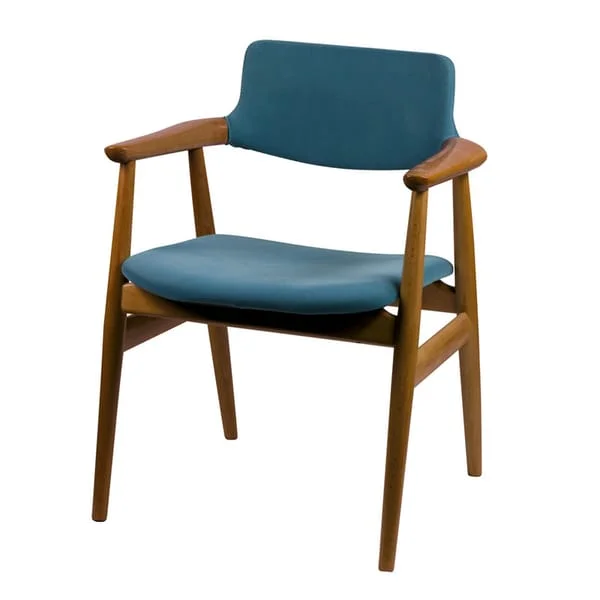
Use upholstered chair designs to establish the chair form first, then confirm the proposed covering and cushion specification. A photograph cannot reliably identify whether a smooth covering is vinyl, PU, or natural leather.
Test cleanup with the products your team actually uses
List the cleaner name, concentration, contact time, application method, and required rinsing. Send that list to the upholstery supplier. “Disinfectant resistant” is too broad if the claim does not identify the chemical and use conditions.
Spradling's vinyl care guidance recommends prompt spill removal and warns that certain aggressive cleaners can damage the material. It also discusses dye transfer. These are reasons to check the selected product's current instructions rather than treat all vinyl as stain-proof.
For fabric, distinguish stain resistance from a moisture barrier and from cleanability. Those are different properties. Crypton's technical resources separate product specifications and care information. Request the relevant documents for the actual fabric, rather than transferring claims from a different performance range.
Run a documented comparison on samples
With the supplier's approval, expose representative samples to the spills your restaurant commonly sees and clean them as instructed. Record the substance, contact time, cleaner, and result after drying. The exercise helps compare your shortlist; it is not a laboratory test or proof of years of service.
Include light and dark colors if both are under consideration. A pattern may make some marks less obvious, but that does not remove the need for cleaning. A pale covering may reveal clothing transfer that was difficult to see on a darker sample.
Seams are part of the cleaning problem
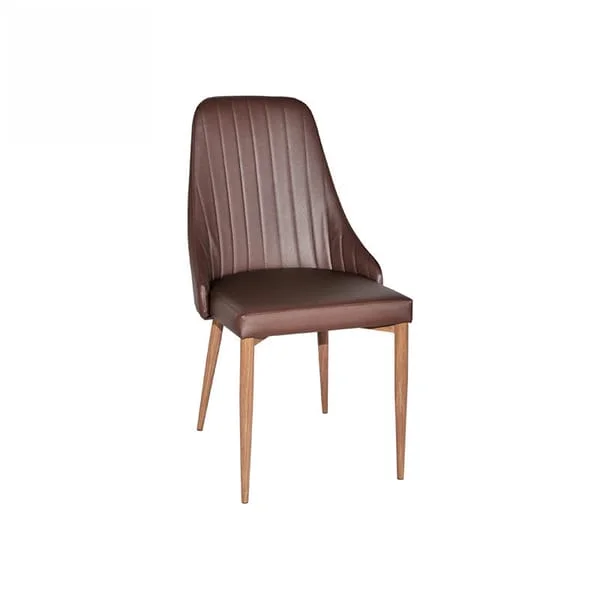
A wipeable face does not make the complete seat waterproof. Stitching, piping, buttons, channels, and joins can collect crumbs or allow moisture to reach other layers. Look at the lowest point where liquid might gather and the areas a cloth cannot reach easily.
Ask whether decorative detailing can be reduced on the busiest seats. A plain seat panel with a textured back may provide the desired appearance while simplifying the main spill area. Confirm how that combination will be constructed and cleaned, rather than assuming different materials can simply be exchanged.
For a room with both loose chairs and booth seating, coordinate upholstery codes but review seam layouts separately. Long banquette runs and curved chair shells use the material differently. Pattern direction, stretch, and joins can change the result.
Do not let one abrasion number decide the order
Abrasion evidence answers a particular test question. It does not by itself establish resistance to cleaning chemicals, dye transfer, seam failure, or every type of wear. Ask for the method, result, and applicability to the supplied material.
For PU coverings, review hydrolysis resistance where relevant to humidity and use. Ultrafabrics identifies hydrolysis testing as an important performance consideration for polyurethane. A result from a named material cannot establish the durability of an unidentified PU covering.
Any project-specific fire or other compliance documentation should match the required material or upholstered assembly and destination. Confirm that scope with the responsible project professional. A generic fabric certificate is not evidence for every finished chair configuration.
Ask what happens when one seat is damaged
Check whether the seat pad can be removed, whether the back is separately upholstered, and how replacement parts are identified. Ask who can carry out the repair and whether it requires removing the chair from service. A covering that is easy to clean can still be expensive to replace if the whole shell must be rebuilt.
Keep a labeled approved sample and material code with the order. Confirm reorder conditions and expect possible batch variation. If spare upholstery is proposed, agree storage guidance and quantity with the supplier; excess material is useful only if it remains suitable for the repair.
Can the same cleaner be used on fabric and vinyl?
Only when the exact products' instructions permit it under the intended conditions. Do not transfer a cleaning recipe between materials or increase concentration to speed up service. If the operating routine cannot follow the care instructions, reconsider the covering before ordering.
For LONGG Furniture, prepare a shortlist from the material and finish references, then share your menu, cleaning routine, chair quantity, and preferred seam detail. Ask for the product-specific specification and repair method alongside the physical sample.