
Wood and metal restaurant chairs can both suit demanding commercial use when their construction, finish, and maintenance match the venue. Neither material is automatically more durable. Compare the complete chair: joints, seat support, frame geometry, glides, weight, and repair options matter as much as the material name.
A dining room that rarely changes layout may prioritize appearance and sitting comfort. A cafe that clears its floor every evening has a different handling problem. Start by describing that daily routine before deciding whether a wood or metal frame is the better fit.
Compare the complete chair, not two material labels
| Buying question | Wood-frame chair | Metal-frame chair |
|---|---|---|
| What carries the load? | Timber sections, joints, and seat connections. | Tube or solid sections, welds or fasteners, and seat connections. |
| What affects handling? | Species, section sizes, upholstery, and shape. | Metal type, section sizes, upholstery, and shape. |
| Where does wear show? | Finish, edges, joints, and contact points. | Coating, exposed edges, weld areas, and contact points. |
| What can be repaired? | Depends on joint construction and finish system. | Depends on connections, coating, and replaceable components. |
| How is appearance controlled? | Grain and stain variation need an agreed range. | Color, texture, sheen, and coating details need a reference. |
Look at where the frame meets the seat and back
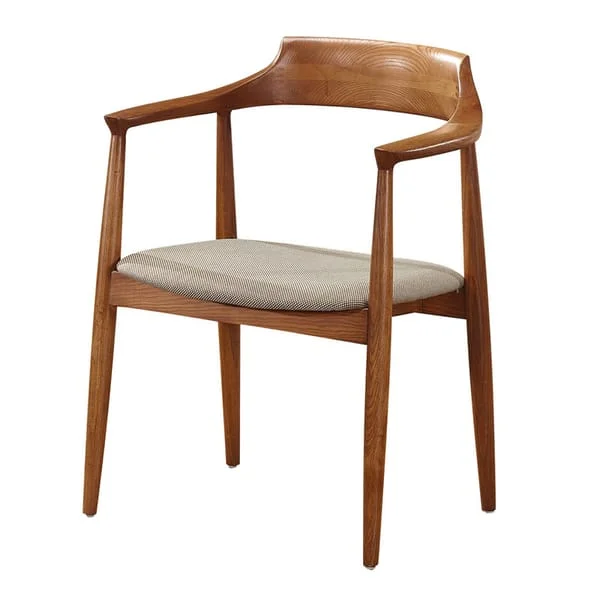
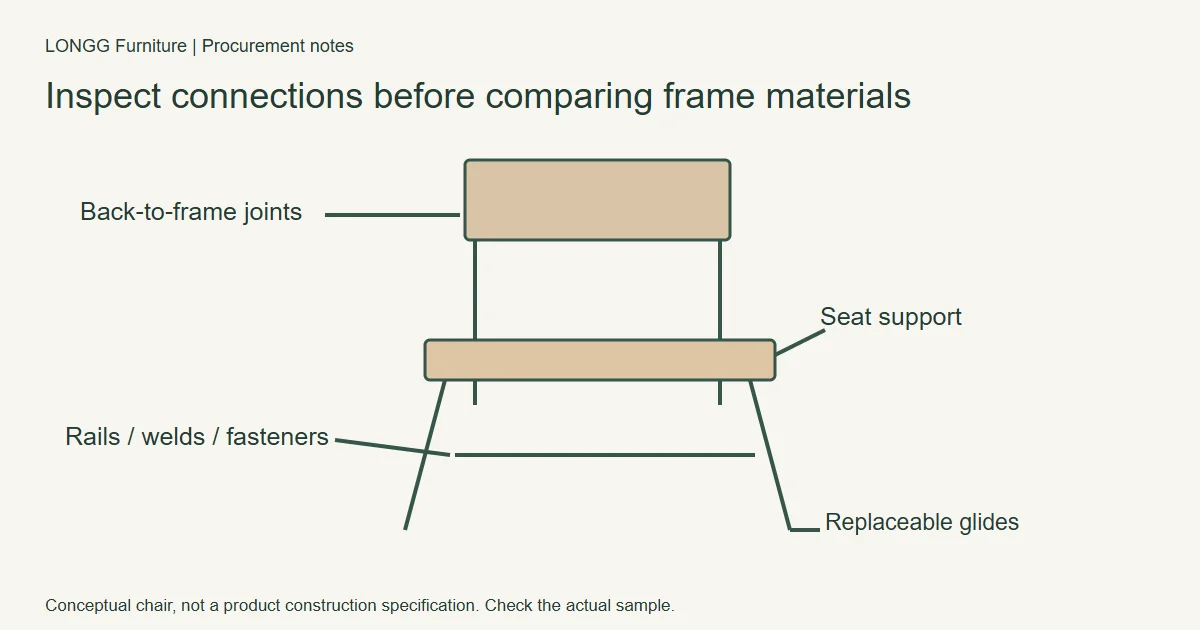
On a wood chair, inspect the rails, leg joints, back supports, and seat attachment. Ask which joints are structural and how they are made. A familiar joinery term does not establish the quality of its execution. Gaps, movement, splits, and poorly fitted connections deserve clarification.
Wood also responds to its moisture environment. The US Forest Service Wood Handbook describes moisture-related dimensional behavior. For procurement, request suitable material preparation, construction, and care guidance for the destination instead of prescribing one moisture percentage for every venue.
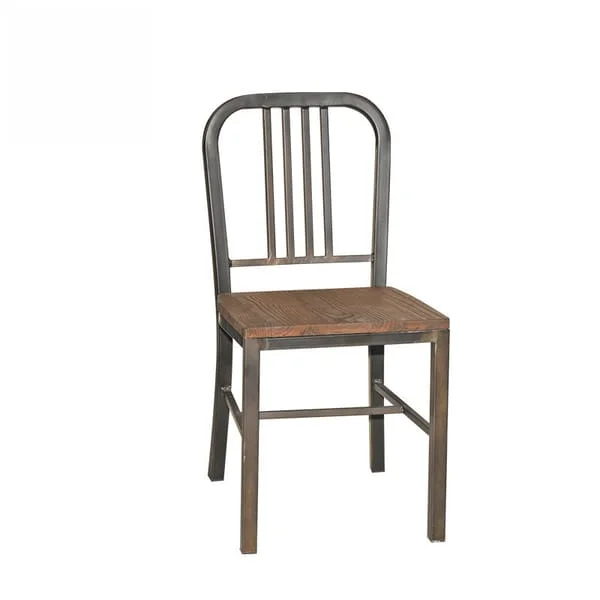
On a metal chair, identify whether the frame is steel, aluminum, or another specified material. Review sections, bends, weld locations, fasteners, and the points where the seat and back connect. A smooth coating can conceal the construction beneath it, so obtain product documentation as well as a finished sample.
Weight and durability are different questions
A heavier chair is not proof of greater durability. Weight can come from thick sections, a substantial seat, or decorative parts that do not resolve a weak connection. Conversely, a lighter design still needs evidence that it suits the intended commercial use.
Ask for the actual finished weight of each proposed configuration. A change from a simple seat to a padded shell can alter handling even if the frame remains the same. Review the lifting points and balance, not just the number in the specification.
Aluminum often enables lighter frames than comparable steel constructions, but complete products can differ substantially. Avoid describing every metal chair as lightweight. For a fair review, compare the actual samples staff will carry, move, and place beneath the tables.
Make movement part of the sample review
Have staff move the chair through the route used during setup and cleaning. Check hand positions, narrow doorways, and whether the back can be grasped comfortably. Do not assume a chair can be stacked or lifted onto a tabletop unless the manufacturer approves that method.
Evaluate glides on the intended floor. Suitable, replaceable glides can help protect both the floor and chair, while missing or worn glides can introduce noise and uneven contact. Record the glide type and how replacements are ordered.
Specify the finish around the cleaning routine
Ask for the finish system, approved cleaners, and maintenance instructions for each candidate. A painted wood chair, clear-coated timber chair, powder-coated metal chair, and anodized aluminum chair may require different treatment.
For example, Emeco's care instructions distinguish its anodized and powder-coated versions and discuss replacement glides. That is a useful reminder to request instructions for the exact finish; it is not permission to apply one manufacturer's cleaning chemicals to every metal chair.
Check the places staff touch most: top rails, seat edges, arms, and the lower frame. Ask how localized finish damage is repaired and whether touch-up material is available. A repair that is structurally acceptable may still differ visibly in color or sheen.
Choose the visual relationship with the room
Wood chair designs can connect with timber tables and architectural finishes, but exact matching across different species and grain is not automatic. Approve a range of acceptable variation using physical samples. View them under lighting similar to the restaurant.
Metal chair designs can provide thin profiles, open frames, or a defined color accent. Ask whether the proposed color and sheen are repeatable across chairs, stools, and table bases. Different coating processes can make the same color reference look different.
Mixed materials may be the most useful answer. A metal frame with a wood seat or a wood frame with upholstery can combine the desired appearance and contact surfaces. Evaluate the interfaces between those materials, including movement, fasteners, and cleaning access.
Comfort should be checked independently of the frame material. Back angle, seat shape, usable width, upholstery, and the table relationship affect the sitting experience. If padding is important, compare upholstered seating configurations without assuming that a padded chair is automatically comfortable for every guest.
Plan repairs before choosing a large batch
Ask which parts can be replaced without retiring the whole chair. Seat pads, back panels, glides, and accessible hardware may offer a practical repair path. Confirm how a technician reaches those parts and whether the relevant codes remain available for reorder.
A wood joint repair may require a specialist and time out of service. Repairing a welded metal frame may affect its finish and should not be improvised in the dining room. Compare the proposed repair process and evidence, rather than assuming one material is always easy to fix.
Match the decision to your venue
For a frequently rearranged cafe, prioritize manageable weight, reliable connections, suitable glides, and an approved handling method. For a longer-stay dining room, examine sitting comfort, appearance under the venue lighting, and repairable upholstery alongside frame quality.
For an outdoor location, request a separate exposure specification. Indoor wood and metal products are not made outdoor-suitable by moving them under a canopy. Frame material, finish, hardware, and any upholstery must all suit the proposed setting.
Use the commercial furniture specification guide to document the broader order. For the wood-versus-metal decision, send LONGG Furniture the movement routine, flooring, cleaning products, finish references, and chair quantity. Ask for comparable samples and relevant model-specific evidence before selecting the batch.