
Choosing the right commercial restaurant furniture is about much more than appearance. Tables, chairs, booths, bar stools, and outdoor furniture must work together to support the restaurant’s concept, available space, customer experience, and daily operating requirements.
Unlike residential furniture, restaurant furniture is used repeatedly throughout the day. It needs to withstand frequent cleaning, continuous movement, changing customer traffic, and the demands of a busy commercial environment.
For restaurant owners, hospitality groups, designers, and purchasing teams, selecting the right furniture can improve both the visual identity of a space and its long-term operational efficiency.
This guide explains the key factors to consider when choosing commercial restaurant furniture for restaurants, cafés, hotels, bars, canteens, and other hospitality projects.
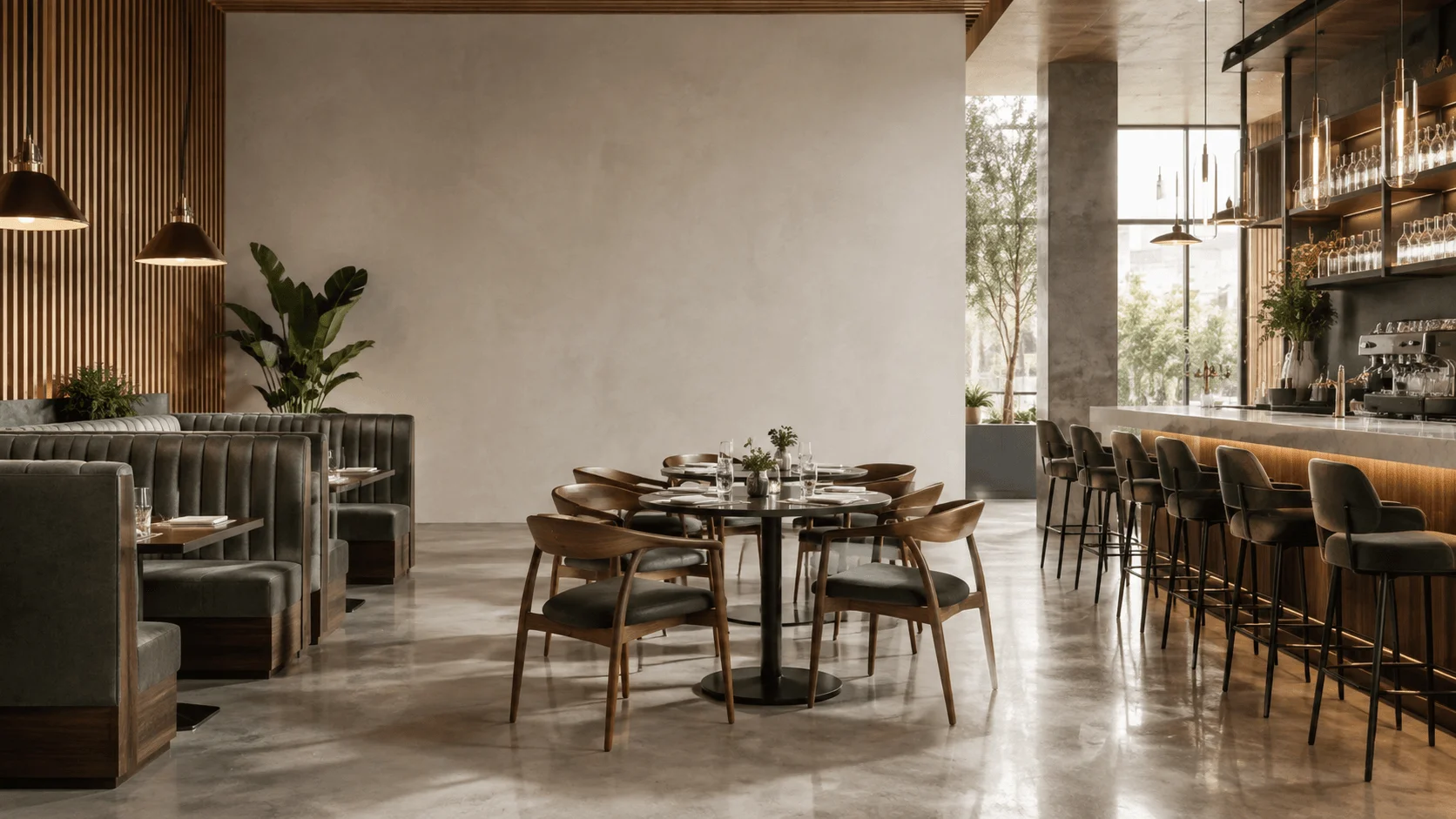
1. Start With the Restaurant Concept
Furniture should support the overall positioning of the restaurant.
A fine-dining restaurant may require upholstered chairs, refined finishes, stone or solid wood tabletops, and carefully coordinated colors. A fast-casual restaurant may focus more on durability, easy maintenance, space efficiency, and faster table turnover.
Different restaurant concepts usually require different furniture solutions:
- Fine dining: upholstered seating, solid wood or stone tables, elegant finishes
- Cafés and bistros: compact tables, wood or metal chairs, flexible layouts
- Fast-food restaurants: durable seating, easy-clean surfaces, efficient table configurations
- Bars and pubs: bar stools, high tables, booth seating, strong metal or wood structures
- Hotel restaurants: coordinated furniture collections suitable for different dining areas
- Outdoor dining: weather-resistant tables, chairs, sofas, and shade solutions
Before selecting individual products, define the atmosphere you want customers to experience.
2. Choose Furniture Designed for Commercial Use
One of the most important distinctions in restaurant furniture is the difference between residential and commercial construction.
Furniture used in hospitality spaces must handle significantly more frequent use than furniture in a home.
Commercial restaurant chairs, for example, should have stable joints, suitable structural reinforcement, durable finishes, and materials appropriate for repeated daily use.
Restaurant tables also require careful consideration. The tabletop, base, fixing system, edge treatment, and surface finish all affect long-term performance.
When evaluating a commercial furniture supplier, consider factors such as:
- Structural stability
- Material quality
- Manufacturing consistency
- Surface durability
- Ease of cleaning
- Replacement and maintenance requirements
- Suitability for the intended commercial environment
Selecting furniture specifically designed for hospitality applications can reduce maintenance problems and improve the overall service life of the furniture.
3. Select the Right Materials
There is no single material that is best for every restaurant. The correct choice depends on the design concept, budget, environment, and maintenance requirements.
Solid Wood
Solid wood creates a natural and warm appearance and is widely used for restaurant tables and chairs.
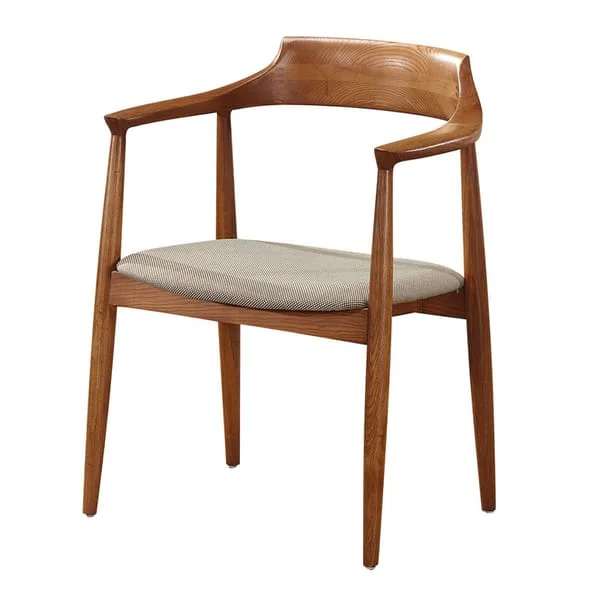
Different wood species, stains, and finishes can produce very different visual styles, from traditional dining rooms to modern cafés.
For commercial projects, the quality of the wood, moisture control, construction method, and surface finish are especially important.
Metal
Metal is commonly used for chair frames, table bases, bar stools, and outdoor furniture.
Steel can provide excellent structural strength, while aluminum is particularly useful for applications where lower weight and corrosion resistance are important.
Powder-coated finishes are available in a wide range of colors, making metal furniture suitable for both industrial and contemporary interiors.
Upholstery
Upholstered restaurant chairs and booths can improve comfort and create a more premium dining environment.
Common upholstery options include fabric, synthetic leather, and other commercial-grade materials.
When selecting upholstery, consider stain resistance, cleaning requirements, color consistency, abrasion resistance, and the intended frequency of use.
Stone and Sintered Stone
Stone-look and sintered-stone tabletops have become popular in restaurants and hospitality spaces because they can provide a refined appearance while offering practical surface characteristics.
They work particularly well in contemporary restaurants, hotels, cafés, and premium dining environments.
Plastic and Resin
Commercial resin and plastic chairs can provide lightweight, easy-maintenance seating for cafés, casual restaurants, food courts, and outdoor areas.
Modern manufacturing methods also allow these materials to achieve more sophisticated shapes and finishes than traditional plastic seating.
4. Plan the Layout Before Ordering
Furniture selection should always be connected to the restaurant floor plan.
Buying attractive furniture without first considering dimensions can lead to problems with walkways, service access, table spacing, or seating capacity.
Important measurements include:
- Table width and length
- Table height
- Chair width and depth
- Seat height
- Space between tables
- Circulation areas
- Service pathways
- Distance between seating and walls
- Booth dimensions
A compact restaurant may benefit from smaller table sizes or flexible combinations that can be rearranged for different group sizes.
Larger restaurants may use a combination of two-person tables, four-person tables, booths, communal tables, and bar seating to create different dining zones.
For project-based purchasing, sharing a floor plan with the furniture manufacturer can help identify appropriate product dimensions and configurations before production begins.
5. Balance Seating Capacity and Customer Comfort
Increasing the number of seats may appear attractive from a revenue perspective, but overcrowding can negatively affect the dining experience.
Customers need enough personal space to sit comfortably, while staff need sufficient room to move safely and serve efficiently.
The right balance depends on the restaurant type.
Quick-service restaurants may prioritize higher seating density, while fine-dining restaurants typically provide more space between tables.
Furniture dimensions can make a significant difference. A chair that is only slightly wider may substantially affect the total number of seats that fit into a large dining area.
This is why furniture specifications should be considered during the layout stage rather than after the interior design has been finalized.
6. Consider Cleaning and Daily Maintenance
Restaurant furniture is exposed to food, beverages, cleaning products, and frequent handling.
Materials and finishes should therefore be selected with daily maintenance in mind.
Smooth surfaces are generally easier to wipe clean. Upholstery materials should be appropriate for the restaurant environment, while tabletop finishes should be selected based on expected use.
For outdoor furniture, maintenance considerations may also include exposure to rain, sunlight, humidity, salt air, or changing temperatures.
When comparing furniture options, ask not only how a product looks when it is new, but also how practical it will be after months or years of commercial use.
7. Coordinate Tables, Chairs, and Booth Seating
Restaurant furniture should look like part of one design system rather than a collection of unrelated products.
This does not mean every piece needs to match exactly.
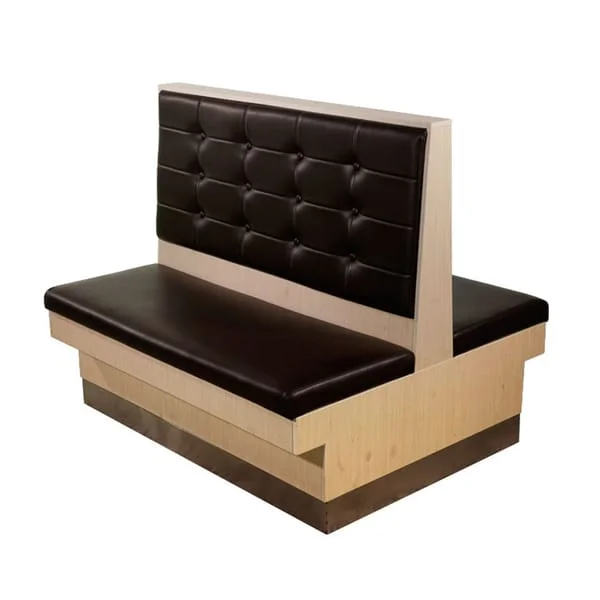
In fact, many successful interiors combine different materials and furniture types. For example, a restaurant may use wood dining chairs, metal table bases, upholstered booths, and stone tabletops in the same space.
The key is consistency in elements such as:
- Color palette
- Wood tone
- Metal finish
- Upholstery texture
- Furniture proportions
- Design language
Custom furniture manufacturing can be useful when a project requires multiple furniture categories to share the same finishes and visual direction.
8. Think Carefully About Restaurant Tables
Tables often receive less attention than chairs during the design stage, but they have a major impact on both appearance and usability.
The main components of a commercial restaurant table are the tabletop and the table base.
Tabletops
Popular options include:
- Solid wood
- Veneered surfaces
- Laminate
- Stone
- Sintered stone
- Outdoor-compatible materials
The correct tabletop depends on the restaurant concept and the conditions in which the table will be used.
Table Bases
Restaurant table bases need to provide sufficient support without unnecessarily restricting customer legroom.
Common configurations include pedestal bases, double bases, four-leg frames, and custom metal structures.
For larger tabletops, the base configuration should be selected according to the dimensions and weight of the top.
9. Choose Seating According to Dining Time
Customer comfort requirements often depend on how long guests are expected to remain seated.
In a fast-food environment, simple and durable seating may be appropriate because dining times are relatively short.
Restaurants where customers stay longer may benefit from:
- Contoured backrests
- Upholstered seats
- Supportive seat dimensions
- Appropriate backrest angles
- Armchairs in selected areas
- Booth seating
Comfort should still be balanced against space efficiency and maintenance requirements.
10. Don't Forget Outdoor Restaurant Furniture
Outdoor dining areas require a different approach from indoor spaces.
Furniture may be exposed to sunlight, humidity, rain, and large temperature changes, depending on the location.
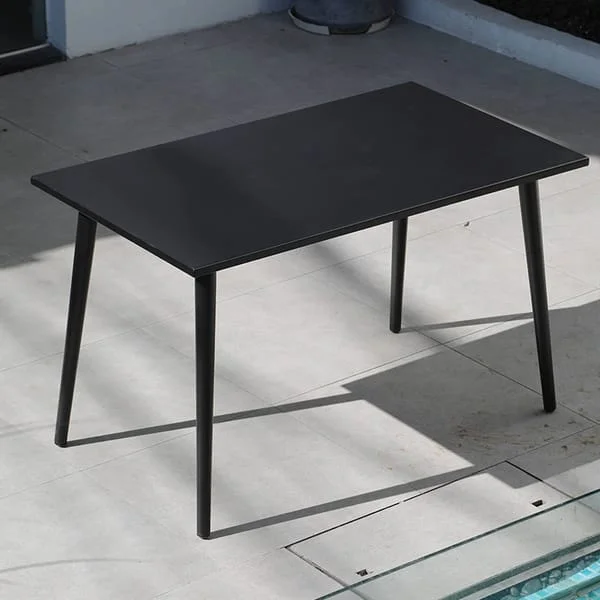
Suitable outdoor furniture materials can include:
- Aluminum
- Outdoor-grade metal
- Resin
- Plastic
- Treated wood
- Outdoor fabrics
- Weather-resistant tabletop materials
Restaurants should also consider whether furniture needs to be stackable, lightweight, movable, or stored during certain seasons.
For projects that include both indoor and outdoor dining areas, coordinating the design of both spaces can help create a more consistent brand experience.
11. Custom Furniture Can Solve Project-Specific Problems
Standard furniture dimensions and finishes work well for many restaurants, but hospitality projects often have unique requirements.
Customization may include:
- Dimensions
- Wood species
- Wood stains
- Metal colors
- Upholstery materials
- Tabletop materials
- Seat heights
- Booth configurations
- Branding details
- Furniture combinations
Custom manufacturing is particularly useful for restaurant chains, hotels, designers, and hospitality projects that require consistent furniture across multiple areas or locations.
However, customization should always consider production feasibility, budget, lead time, minimum quantities, and long-term replacement requirements.
12. Evaluate the Manufacturer, Not Just the Product
For commercial furniture projects, choosing the right manufacturing partner can be as important as choosing the furniture itself.
A reliable restaurant furniture manufacturer should be able to communicate clearly about materials, dimensions, finishes, production requirements, packaging, and delivery.
For international projects, experience with export packaging and logistics is also important.
Before placing a larger order, buyers may want to review:
- Product specifications
- Material samples
- Finish samples
- Production capabilities
- Previous hospitality projects
- Packaging methods
- Quality-control procedures
- Customization capabilities
- Estimated production schedules
Clear specifications before production can prevent many common project problems later.
13. Consider the Total Project Cost
The lowest unit price does not necessarily result in the lowest overall project cost.
Commercial furniture purchasing should also consider durability, replacement frequency, maintenance, shipping, installation, and operational impact.
For example, inexpensive chairs that require frequent replacement may cost more over several years than better-constructed commercial seating.
The objective should be to find the appropriate balance between:
Design + Durability + Function + Budget
For B2B hospitality projects, evaluating furniture from a long-term operational perspective often leads to better purchasing decisions.
Choosing a Commercial Restaurant Furniture Manufacturer
Restaurant furniture plays a direct role in how a hospitality space looks, feels, and operates.
The best solution combines attractive design with suitable materials, commercial durability, comfortable dimensions, efficient space planning, and realistic maintenance requirements.
LONGG Furniture is a commercial restaurant furniture manufacturer in China providing custom indoor and outdoor furniture solutions for restaurants, cafés, hotels, and hospitality projects.
Since 2016, we have supplied commercial furniture to customers in more than 30 countries worldwide.
Our product range includes restaurant tables, dining chairs, bar stools, restaurant booths, dining sets, outdoor furniture, and customized furniture solutions.
Whether you are developing a new restaurant, renovating an existing dining space, or sourcing furniture for a multi-location hospitality project, choosing the right furniture specifications at the beginning can make the entire project more efficient.
Planning a restaurant or hospitality furniture project?
Contact LONGG Furniture to discuss your floor plan, furniture specifications, materials, finishes, quantities, and customization requirements.