
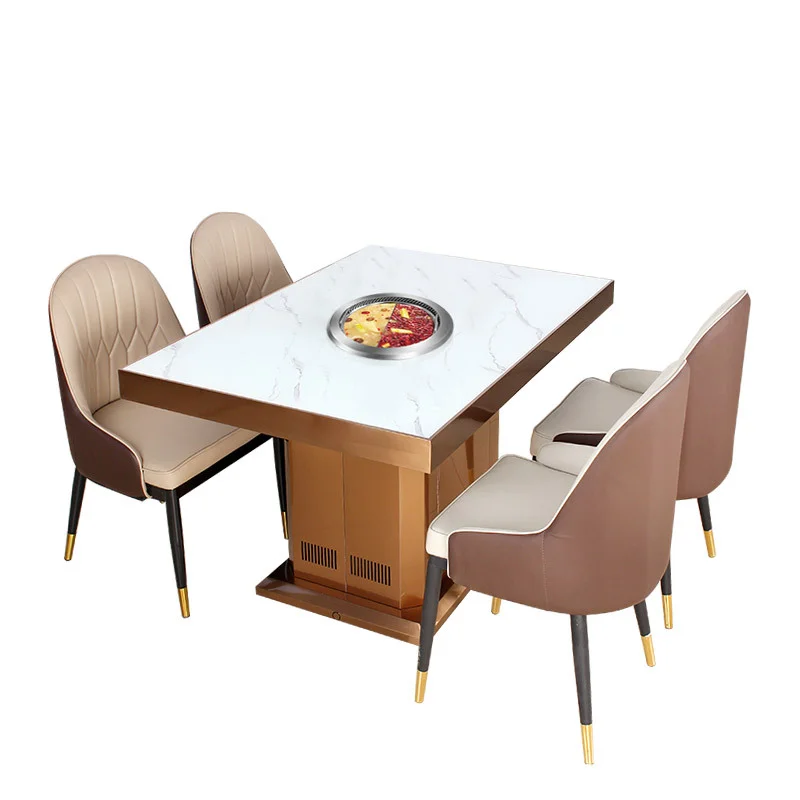
A smokeless hot pot table can help restaurants create a cleaner, more comfortable dining environment while supporting efficient daily operations. For hot pot chains, buffet venues, Korean barbecue restaurants, and specialty dining projects, the right table is not simply a piece of furniture—it must work with the selected cooking equipment, ventilation system, layout, and customer experience.
This guide explains what restaurant owners, designers, and purchasing teams should consider before sourcing commercial smokeless hot pot tables from a manufacturer.
Important: A “smokeless” dining result depends on the complete system, including the table design, selected cooking equipment, extraction or ventilation solution, installation method, and local project requirements. Confirm compatibility before production.
1. Start With Your Restaurant Concept and Dining System
Before selecting table shapes or finishes, define how the restaurant will operate.
Consider the following questions:
- Will the project use induction cookers, built-in hot pot equipment, gas equipment, or another approved system?
- Is the restaurant planning a downdraft extraction, overhead extraction, or another ventilation solution?
- How many guests should each table seat?
- Will the restaurant use individual pots, shared pots, split pots, or grill-and-hot-pot combinations?
- Does the layout need to support a high-turnover hot pot chain, private dining rooms, or premium dining spaces?
A commercial hot pot table should be designed around the operating system—not selected only because it looks attractive. The table cut-out, equipment position, cable routing, access panels, and base structure must be coordinated before mass production.
2. Choose a Table Layout That Supports Service and Seating Capacity
The right table shape affects both the customer experience and the restaurant’s seating efficiency.
Round Hot Pot Tables
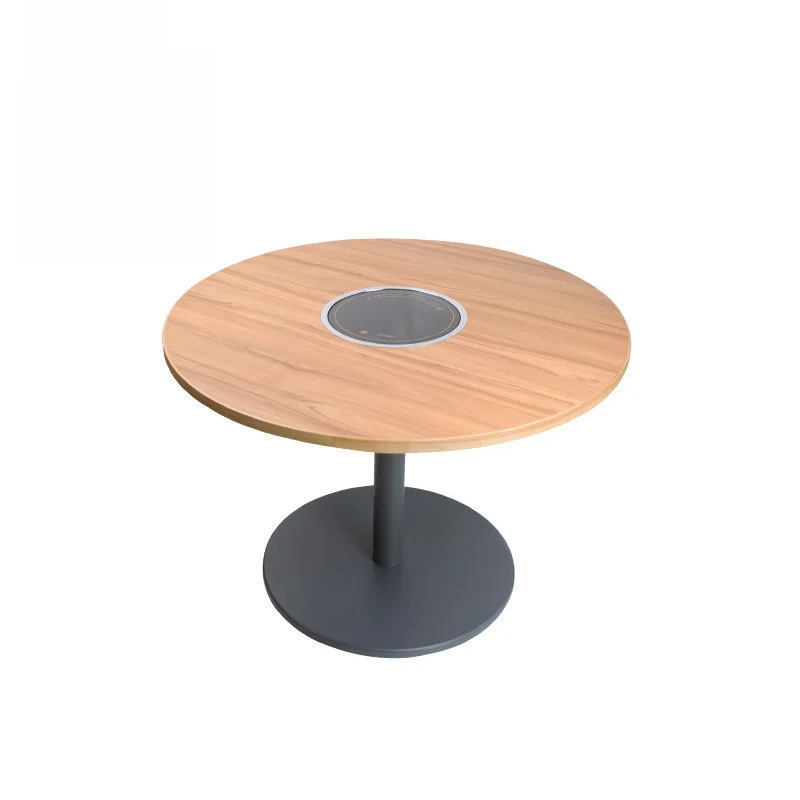
Round tables are commonly used for shared dining because they encourage conversation and make it easier for guests to reach the center pot or shared dishes. They are suitable for family dining, private rooms, and traditional hot pot concepts.
Square and Rectangular Hot Pot Tables
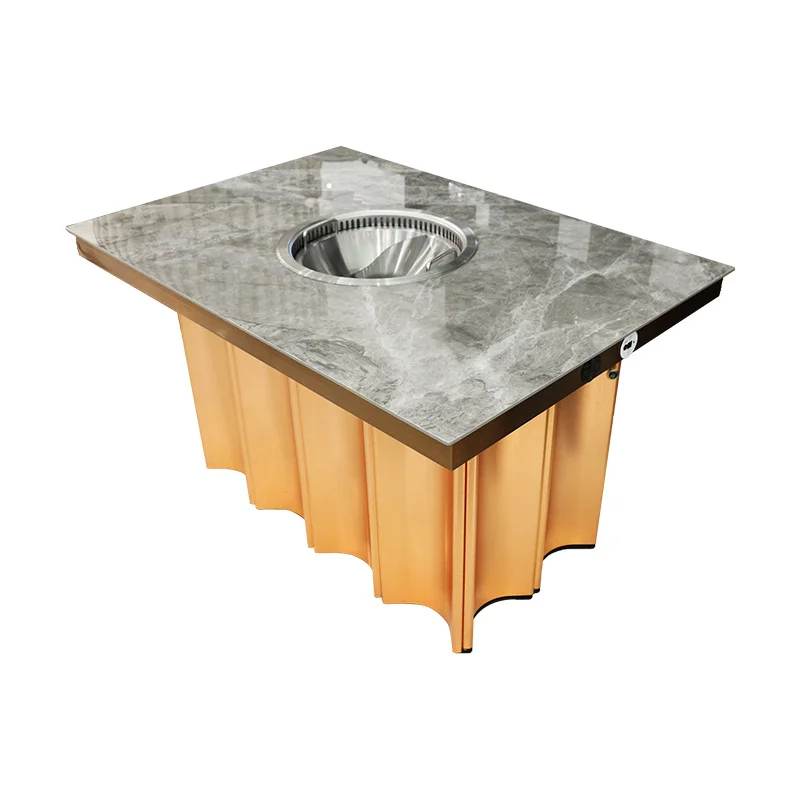
Square and rectangular tables are efficient for planned restaurant layouts. They can be arranged in rows, against walls, or combined with booth seating. This option is often practical for hot pot chains, buffet restaurants, and high-volume dining spaces.
Custom-Shaped Tables
For projects with a distinctive brand concept, custom commercial hot pot tables can be developed in oval, curved, modular, or irregular shapes. A custom solution may also combine tables with restaurant booths, partitions, storage, or integrated power access.
When planning the layout, leave adequate space for:
- Guest seating and movement
- Staff service routes
- Table cleaning and maintenance
- Equipment access
- Ventilation installation
- Emergency and local safety requirements
3. Select Commercial-Grade Tabletop Materials
Hot pot restaurants place high demands on table surfaces. Heat, spills, sauces, cleaning chemicals, and frequent use can quickly damage residential-grade furniture.
Common commercial tabletop options include:
| Tabletop Material | Best For | Key Considerations |
|---|---|---|
| Compact laminate | High-traffic restaurants | Durable, easy to clean, available in many colors and patterns |
| HPL-laminated tabletop | Cost-effective commercial projects | Confirm edge treatment, heat resistance, and base material |
| Sintered stone or ceramic-look surface | Premium restaurants | Attractive appearance; confirm weight, edge protection, and equipment cut-outs |
| Solid wood or wood veneer | Traditional or upscale concepts | Requires suitable protective finishing and regular maintenance |
| Metal or stainless-steel details | Modern or heavy-use environments | Often used for accents, frames, or functional components |
The best choice depends on your brand positioning, budget, daily operating conditions, cleaning process, and selected cooking equipment.
Avoid choosing a tabletop based only on a sample photo. Ask the manufacturer to confirm the actual material structure, finish, thickness, edge detail, and suitability for the planned hot pot setup.
4. Confirm Ventilation and Equipment Compatibility Before Production
This is the most important step when sourcing smokeless hot pot tables.
A table manufacturer and equipment supplier should confirm the following details before drawings are approved:
- Equipment brand, model, and installation dimensions
- Required tabletop cut-out size
- Ventilation or extraction position
- Access requirements for service and maintenance
- Power, cable, and connection routing
- Table base structure and stability
- Heat protection requirements around the equipment
- Installation responsibilities on site
Do not assume every hot pot table can support every cooker or ventilation system. A table may need a custom frame, reinforced tabletop, service opening, or removable panel depending on the selected configuration.
For international projects, the restaurant owner or contractor should also verify local building, electrical, gas, fire, ventilation, and food-service requirements before final approval.
5. Prioritize Easy Cleaning and Daily Maintenance
A good commercial hot pot table should help staff clean quickly between seatings.
Look for practical details such as:
- Smooth, wipeable tabletop surfaces
- Sealed or well-finished edges
- Stable table bases that do not collect excessive dirt
- Durable finishes suitable for frequent cleaning
- Accessible areas around equipment openings
- Replaceable or serviceable components where needed
Complex designs can look impressive, but they may create cleaning difficulties or increase maintenance costs. For high-volume hot pot restaurants, a simple and well-engineered table is often more valuable than an overly decorative design.
6. Consider Customization Beyond Size and Color
Custom hot pot tables can be tailored to the restaurant’s floor plan, customer profile, and operating model.
Typical customization options include:
- Table dimensions and seating capacity
- Round, square, rectangular, or modular layouts
- Tabletop material and finish
- Base style and base material
- Equipment cut-outs and access openings
- Cable-management or power-routing solutions
- Compatible booth seating and chair combinations
- Brand colors, decorative details, and custom finishes
For a chain restaurant, standardizing table dimensions and material specifications can make future expansion, replacement, and maintenance easier. For boutique or premium projects, custom finishes and details can help create a more distinctive dining identity.
7. Evaluate the Manufacturer, Not Just the Product Photo
When comparing commercial hot pot table suppliers, do not make a decision based only on price or online images.
Ask practical questions:
- Can the manufacturer provide detailed drawings before production?
- Can it work with your selected equipment dimensions?
- Are the tabletop materials and finishes clearly specified?
- Can it produce samples for large or customized projects?
- Does it have export packaging experience?
- Can it provide product photos, project references, and production updates?
- How will production time be confirmed?
- What information is needed to prepare an accurate quotation?
A reliable commercial furniture manufacturer should help identify potential design issues before production begins. This reduces the risk of incorrect cut-outs, unstable structures, incompatible equipment, or costly on-site modifications.
8. Information to Prepare Before Requesting a Quotation
The more complete your project information is, the more accurate the product recommendation and quotation will be.
Prepare the following where available:
- Required quantity
- Preferred table shape and seating capacity
- Table dimensions or floor plan
- Equipment specifications
- Preferred tabletop material and finish
- Restaurant design references
- Delivery city and country
- Required delivery timing
- Whether chairs, booths, or other restaurant furniture are also needed
If your project is still in the planning stage, share your layout drawing and concept images. A manufacturer can then recommend suitable commercial hot pot table configurations based on the intended application.
Frequently Asked Questions
Can hot pot tables be customized for my restaurant layout?
Yes. Commercial hot pot tables can be customized in size, shape, tabletop material, finish, base design, and functional configuration to suit your restaurant layout and selected dining equipment.
What makes a hot pot table “smokeless”?
A smokeless dining environment depends on the complete equipment and ventilation solution. The table must be designed to work with the selected cooker, extraction method, installation requirements, and approved project specifications.
Which tabletop material is best for a commercial hot pot restaurant?
There is no single best material for every project. Compact laminate, HPL, sintered stone, wood-based finishes, and other commercial-grade options may be suitable depending on heat exposure, cleaning needs, design style, budget, and selected equipment.
How long does custom hot pot table production take?
LONGG bulk production typically takes 15–20 days, subject to the table design, equipment interfaces, quantities, material availability and scheduling. Approve the coordinated furniture and equipment drawings and confirm the final order schedule. Sample approval, international transit and onsite equipment installation require additional time.
Source Custom Smokeless Hot Pot Tables From LONGG
LONGG Furniture is a Guangzhou, China-based commercial furniture manufacturer supplying custom hot pot tables for restaurants, hot pot chains, buffet venues, and hospitality projects worldwide.
We can customize table dimensions, tabletop materials, finishes, bases, and equipment-related configurations according to your floor plan, dining concept, and project requirements. Send us your quantity, layout drawings, preferred materials, equipment details, and delivery destination to receive suitable product recommendations and a project quotation.